Project Three for ProPublica,
Why Changes in a Florida Ocean Current Could Wreak Havoc Worldwide
Scientists are investigating whether a major Atlantic Ocean current is changing as global temperatures rise. The current plays a central role in regulating climate by transporting heat through the ocean, influencing weather patterns, sea levels, and ecosystems across the Atlantic basin. To determine whether long-term shifts are occurring beyond natural variability, oceanographers conduct repeated research voyages to deploy and retrieve instruments anchored deep below the surface. These devices collect data on temperature, salinity, and current speed, allowing researchers to measure processes that are largely invisible but globally consequential. The work is carried out under physically demanding conditions and contributes to a broader effort to understand how climate change may be altering fundamental systems that shape regional climates and coastal vulnerability over time.
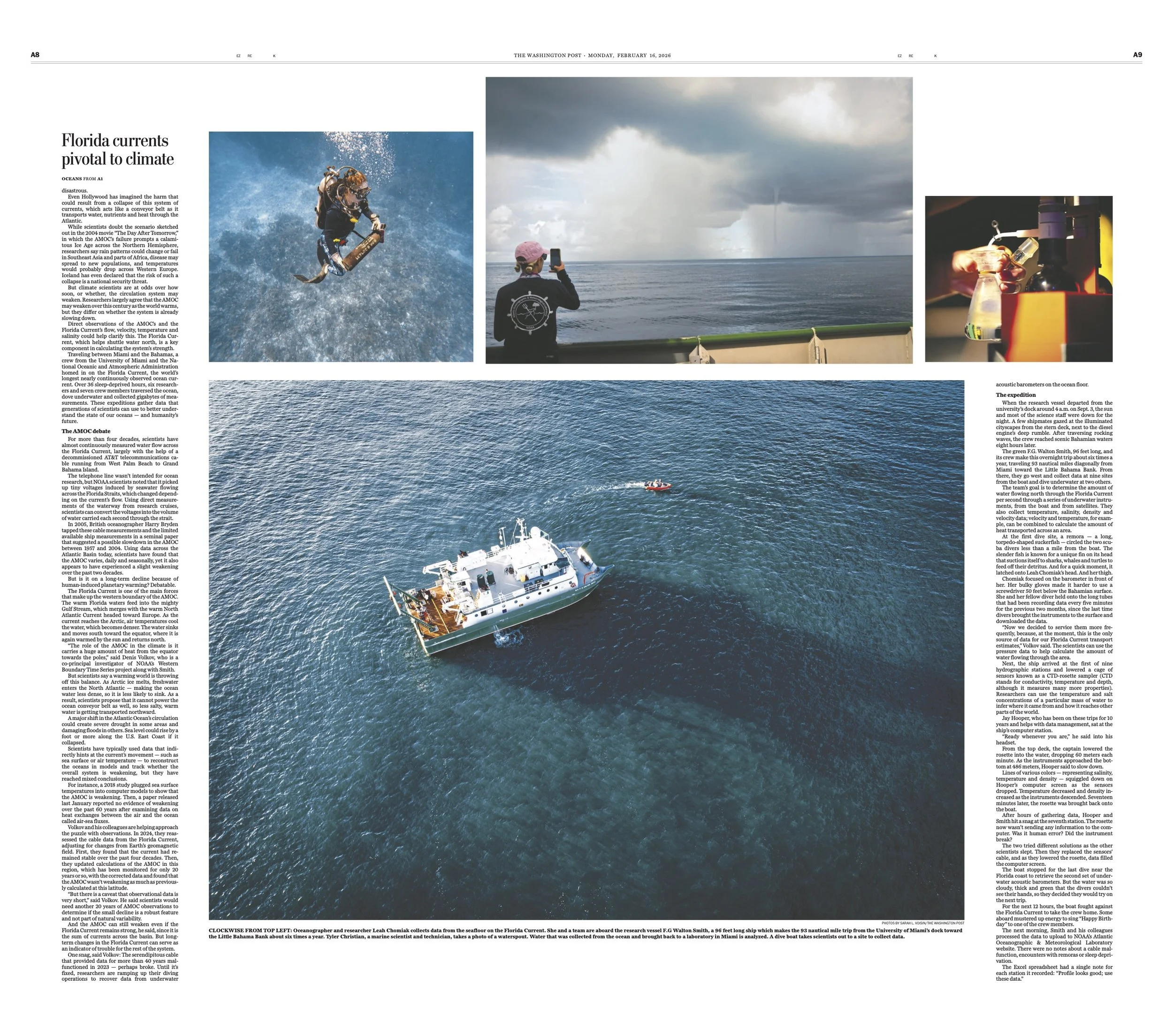
BACKSTORY: I was assigned as both a photojournalist and, effectively, a field editor while embedded with a reporter aboard a research vessel documenting scientists studying changes in a major ocean current linked to climate change. Anticipating that the limitations presented by the physical constraints of working on a boat could result in repetitive imagery - cramped interiors and exterior scenes dominated by monotonous blue water and sky, I preemptively adapted to the challenges by relying on my technical proficiency as a drone operator and leveraging my scuba diving experience to expand the range and scope of available visual potential before even stepping on board.
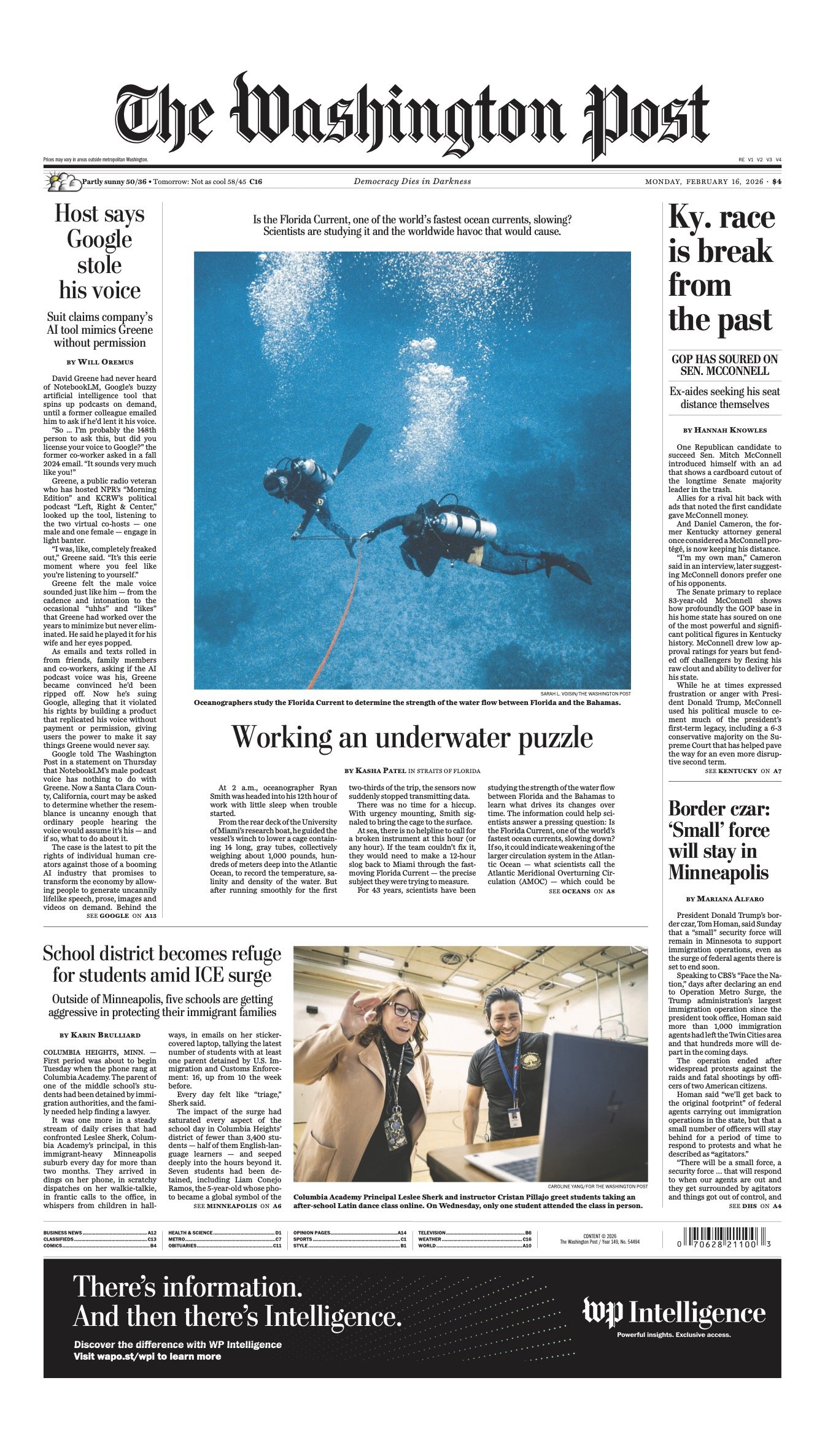
Despite the logistical complexities and regulatory constraints of operating a drone in international waters, the aerial imagery became an essential component of the visual narrative, providing geographic and conceptual context that could not have been achieved from deck level alone. While research regulations did not allow me to scuba dive fully with the scientific team, I was able to enter the water alongside them as they retrieved data collection devices from the sea floor. Photographing from the water’s surface introduced an entirely different visual plane—imagery below the waterline that complemented the views from above. One of these photographs ultimately ran on the front page of The Washington Post on February 15, 2026.
The assignment presented physical challenges as well. Both the reporter and I experienced significant seasickness during the two-day trip, which made sustained work difficult. We continued reporting regardless, prioritizing the completeness of the coverage despite physical discomfort.
Because this assignment took place on a research vessel in open water and involved scientific diving operations, it also required extensive logistical and medical preplanning. We were required to submit detailed medical documentation and physician-signed clearance forms to the academic institution overseeing the vessel. My prior experience working in remote and hazardous environments, combined with my HEFAT training, allowed me to navigate these requirements efficiently and safely. This same level of forethought informs how I work as a photo editor—thinking through not only the visual plan, but also the safety plan, before photographers are sent into complex or risky situations.
When I returned to Washington, D.C., I worked closely with a photo editor to shape the final visual narrative. In the edit, my focus was not simply on selecting strong individual photographs, but on how each image functioned narratively. The aerial images established scale and isolation, situating the science within the immensity of the ocean. The photographs made from the waterline conveyed proximity and risk, underscoring the physical labor and uncertainty inherent in climate research. Images made on deck grounded the story in human process—scientists working methodically within tight constraints. Together, these perspectives prevented the story from flattening visually and instead reinforced the reporting by showing how data is gathered, at what cost, and in what environment.
I think the online presentation is strong and made effective use of the photographs I selected, with thoughtful toning, captioning, and layout. I was not involved in the final print layout, but felt it did not fully reflect the visual diversity that was produced.
While this project may not be the most visually dramatic work in my career, I chose it because it demonstrates the analytical thinking, advance planning, and editorial judgment required to elevate reporting under constrained conditions. It reflects how I approach visual journalism: treating images not as illustration, but as reporting itself—an approach that aligns closely with ProPublica’s investigative mission and its commitment to visuals that deepen understanding, reveal process, and hold complex systems to account.
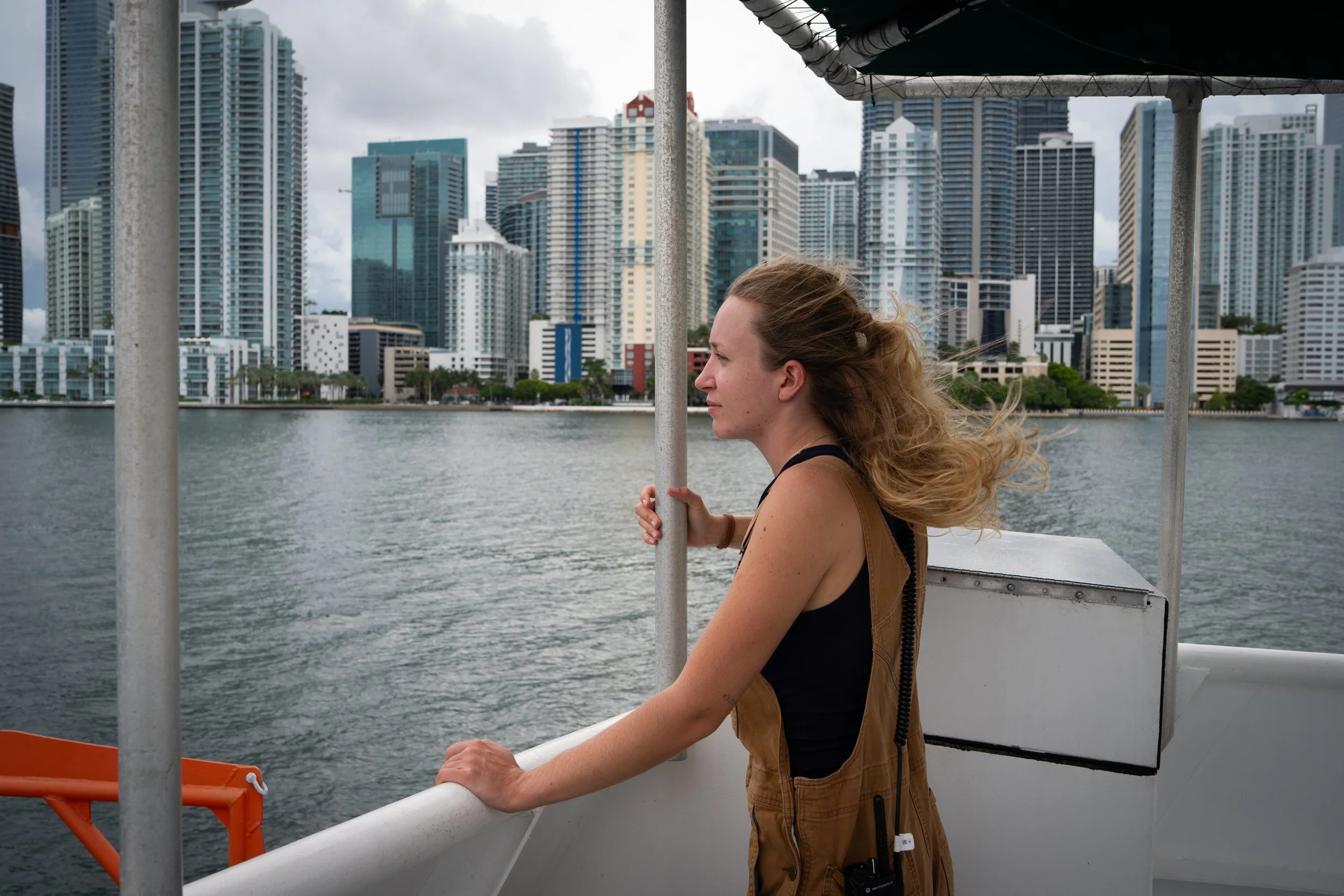
Assistant engineer Paige Fitzpatrick, 23, watches as the research vessel F.G. Walton Smith navigates Miami Harbor in early September 2025. Scientists aboard are beginning a mission to collect data on the Florida Current, a key component of Atlantic ocean circulation.
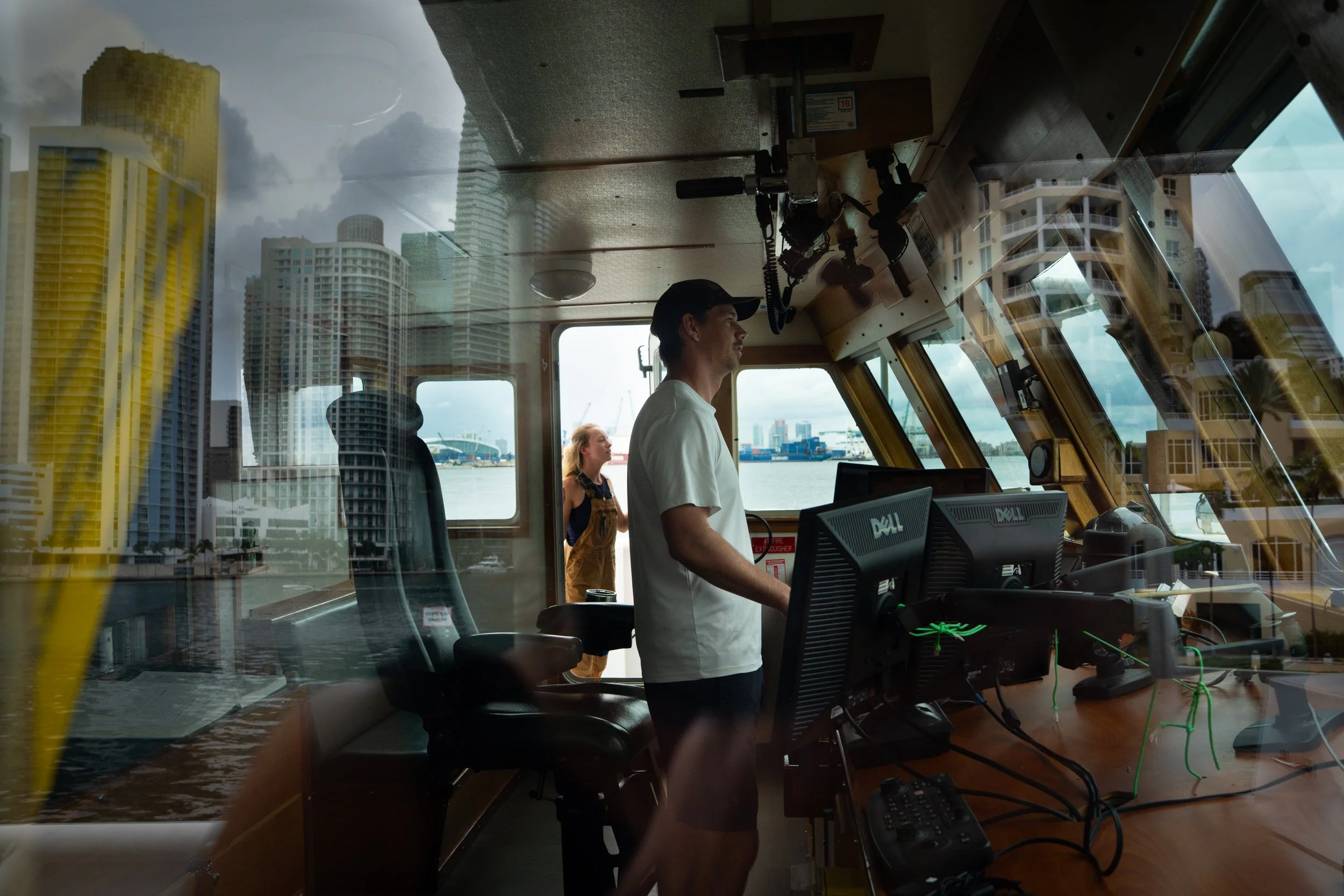
Captain John Cramer, 36, pilots the vessel back toward shore as assistant engineer Paige Fitzpatrick stands in the doorway on the morning of September 4, 2025.
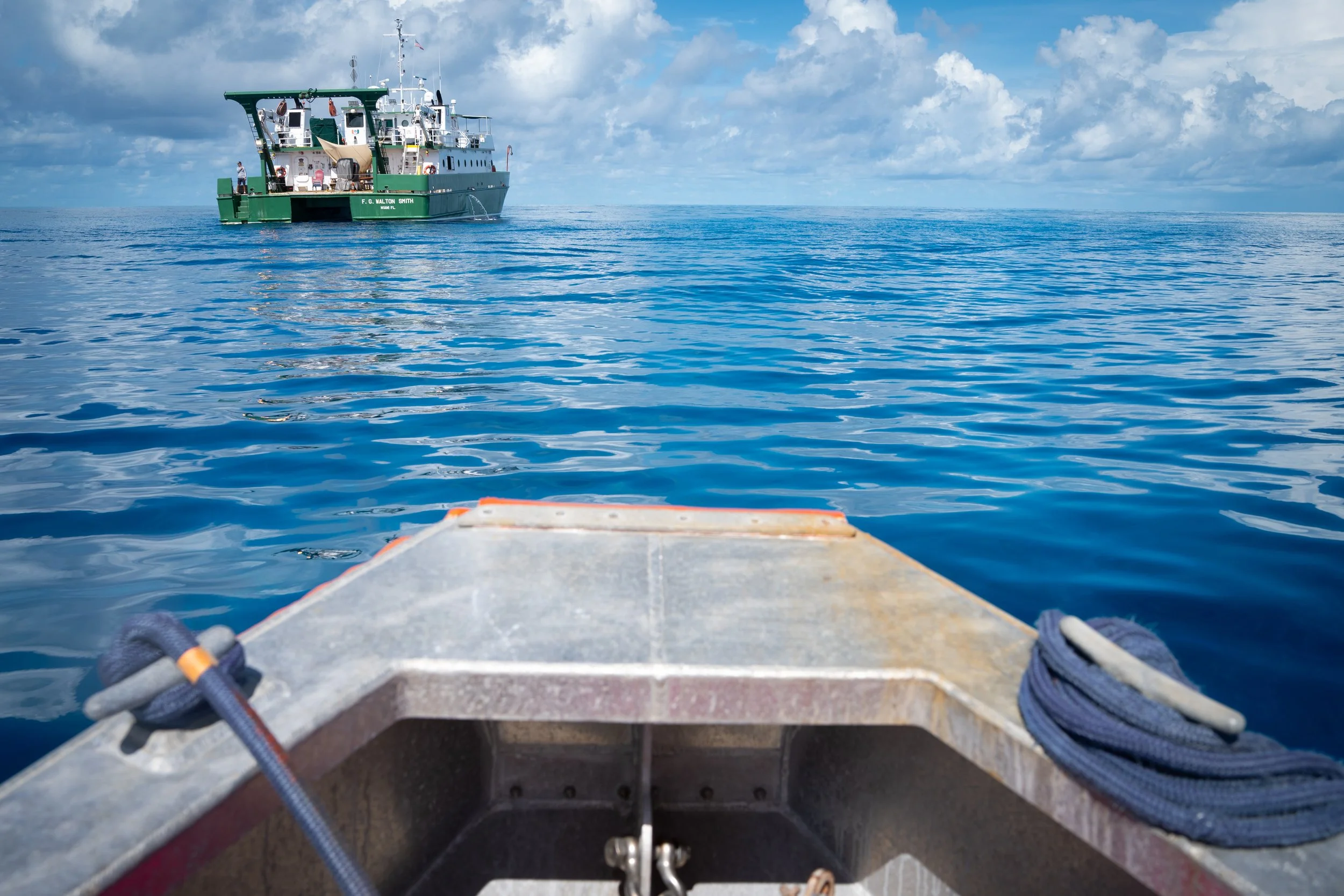
A team of divers returns to the ship after retrieving a scientific instrument from the seafloor that had been collecting data on the Florida Current.
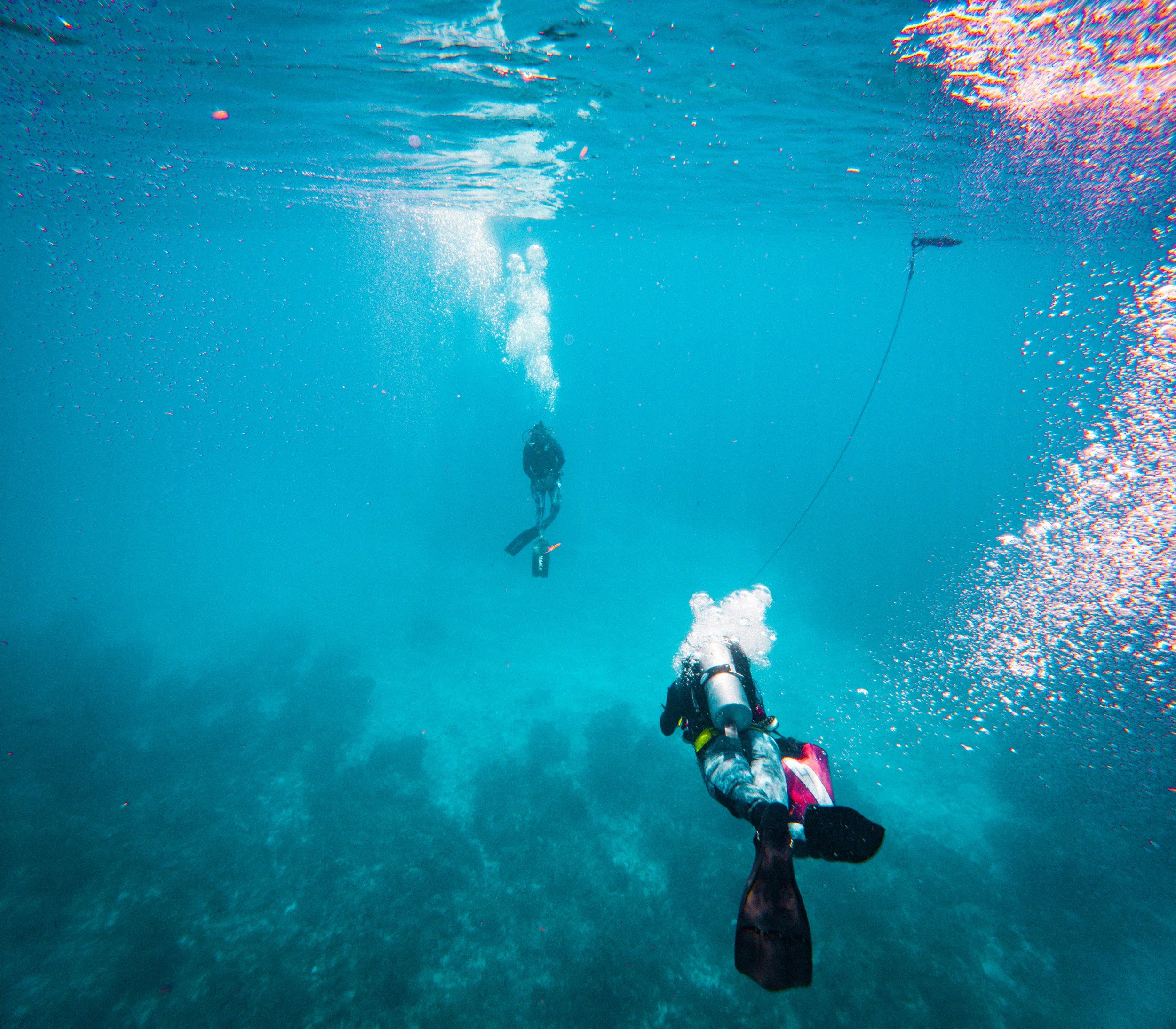
Leah Chomiak, 29, a postdoctoral researcher and physical oceanographer, left, and Zach Barton, 36, a technician and engineer, dive toward the seafloor to recover an instrument during the research mission.
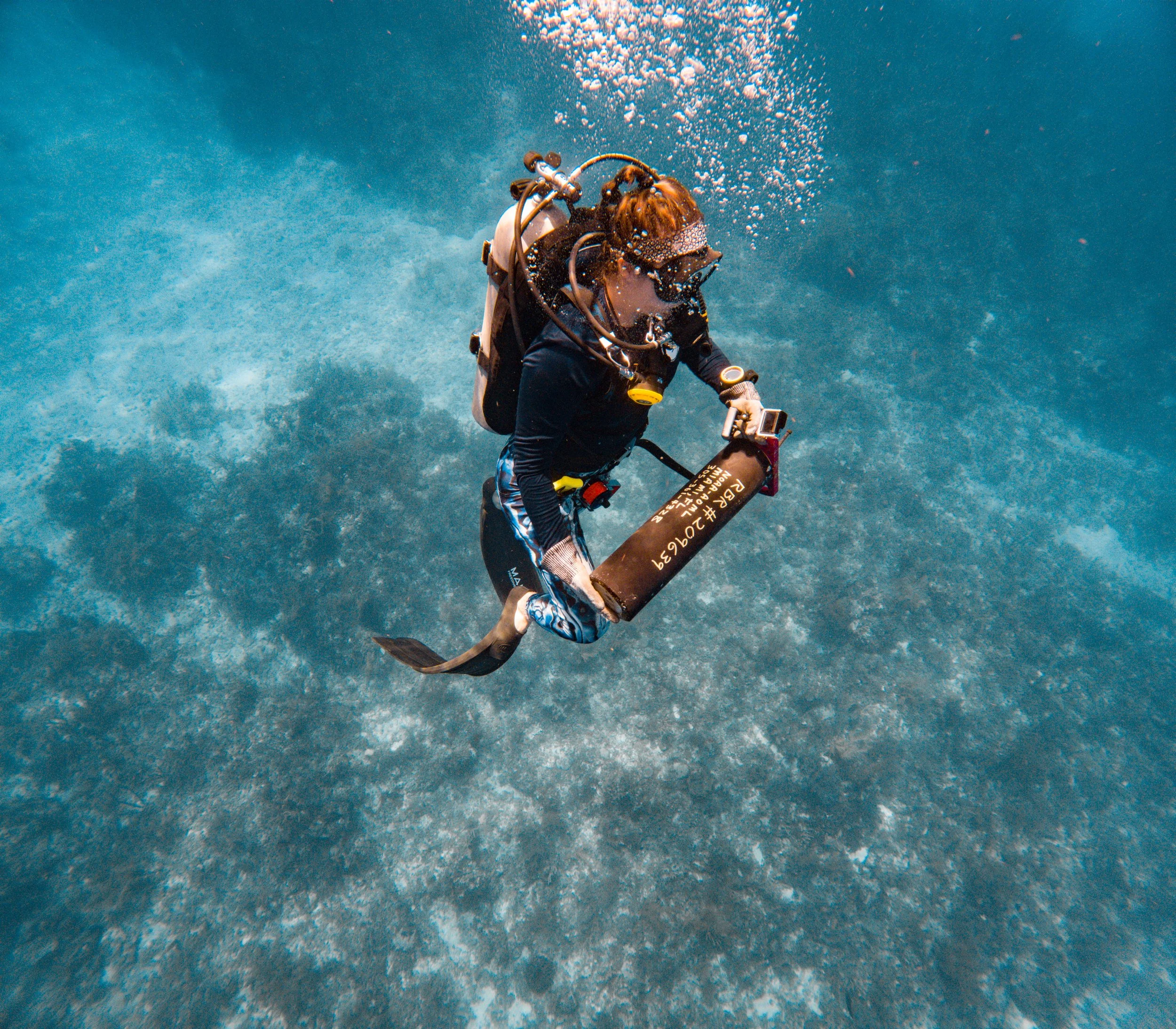
Leah Chomiak carries a scientific instrument retrieved from the seafloor that had been collecting data on the Florida Current.
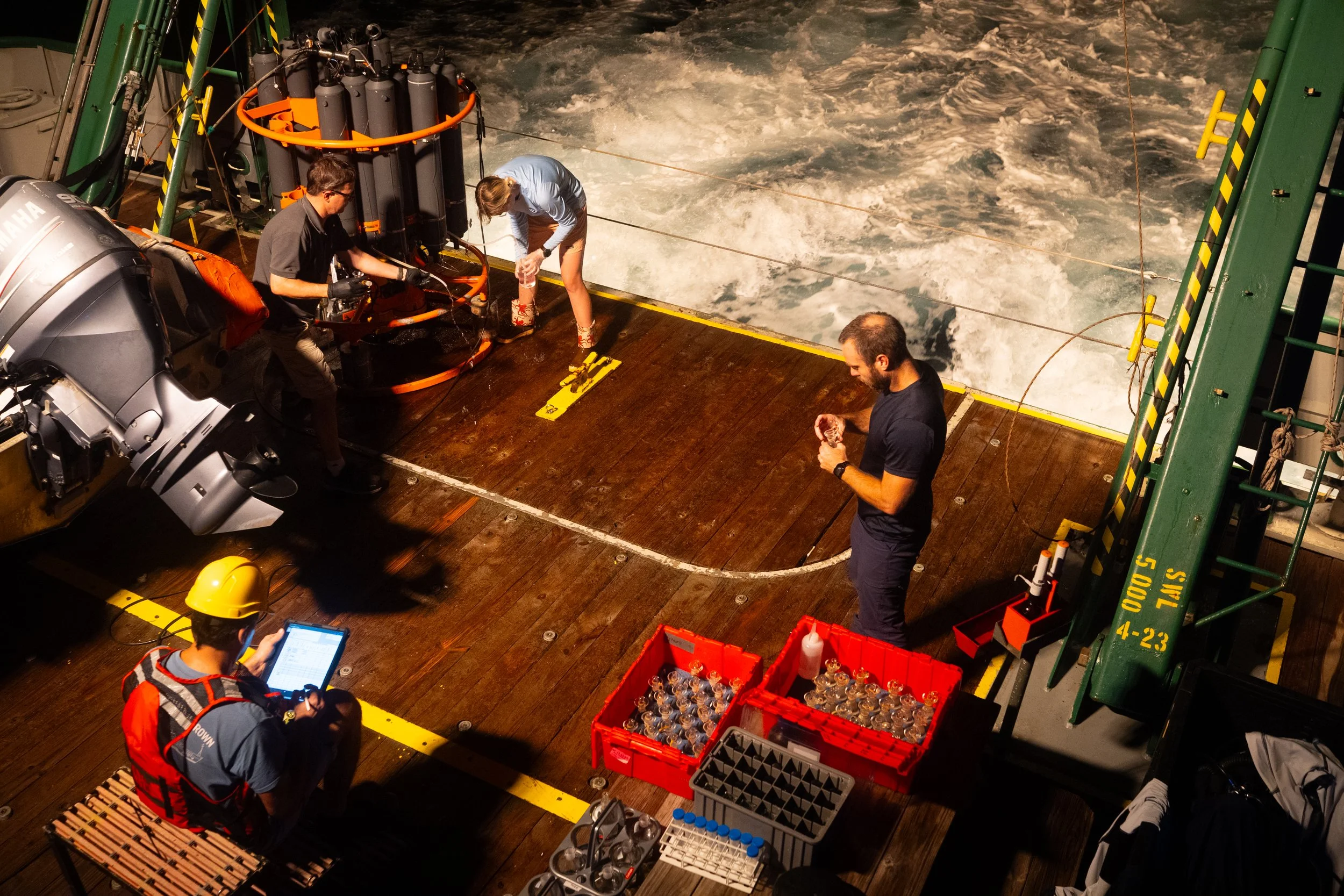
Scientists collect water samples from a recovered instrument in the early morning hours. From left are Denis Volkov, bottom, Ryan H. Smith, Tyler Christian, and Jay Hooper.
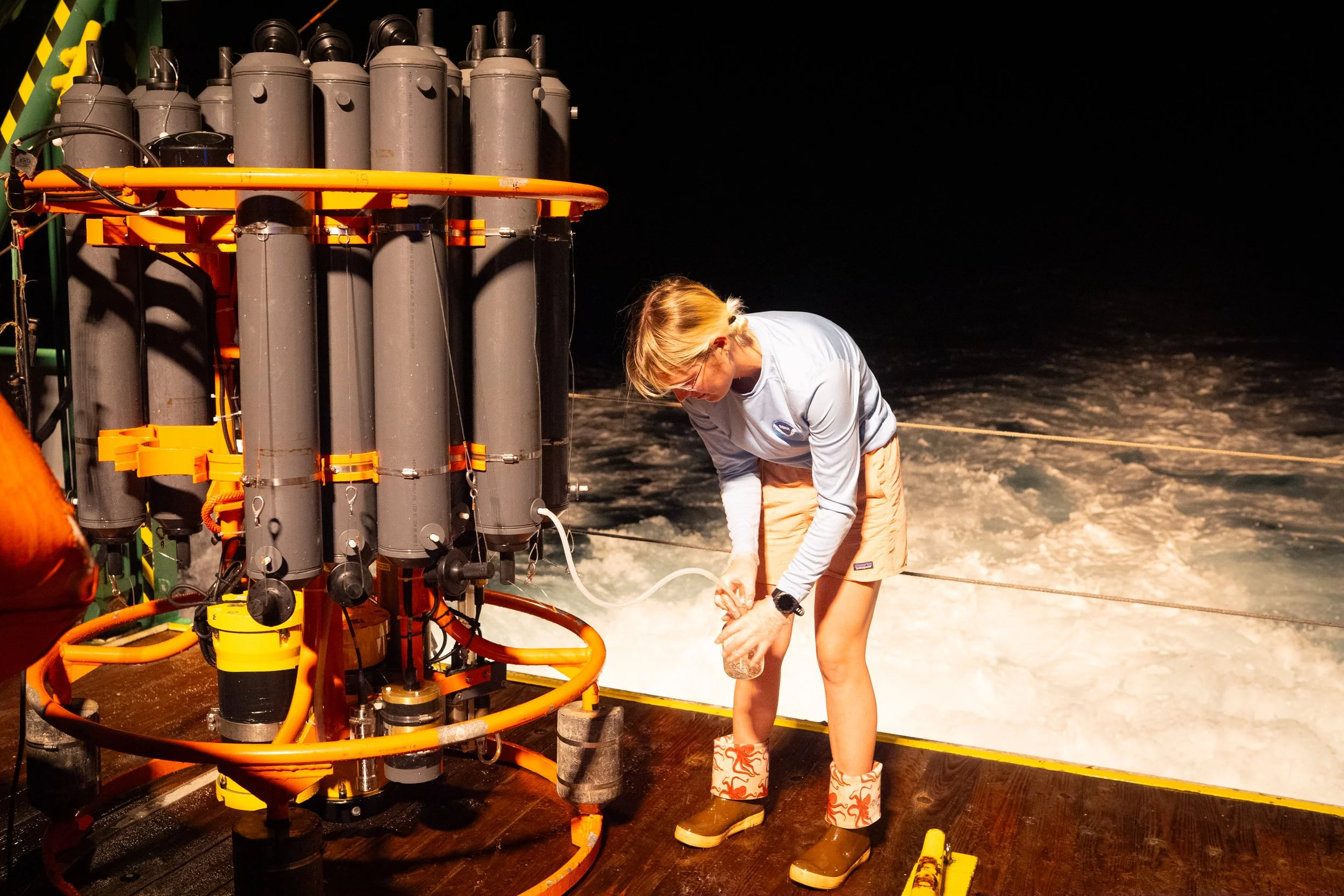
Tyler Christian, 26, a marine scientist and lab and field technician, collects ocean water from a recovered scientific instrument.
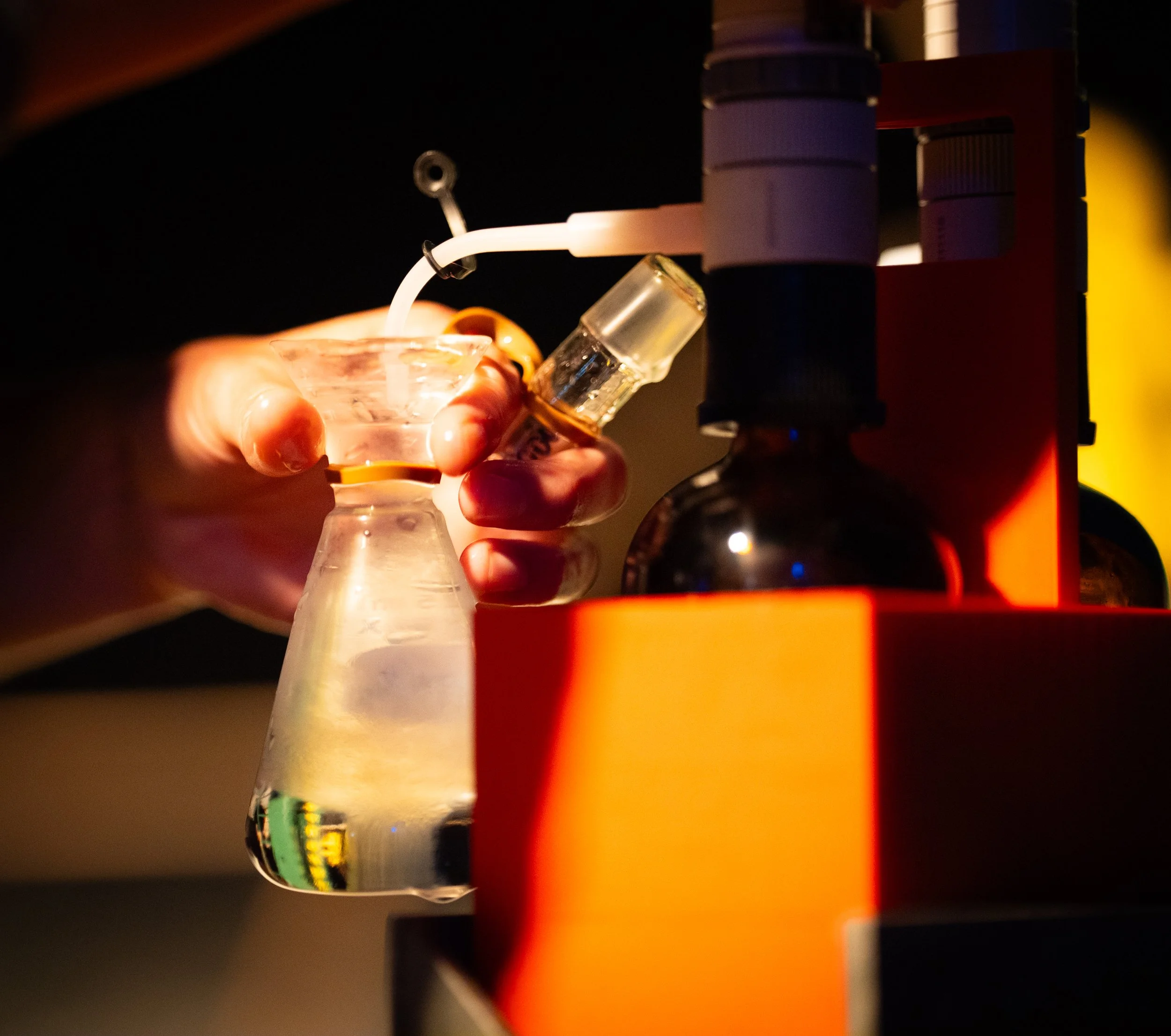
Water samples collected at sea are transported to a laboratory in Miami for analysis as part of ongoing research on the Florida Current.
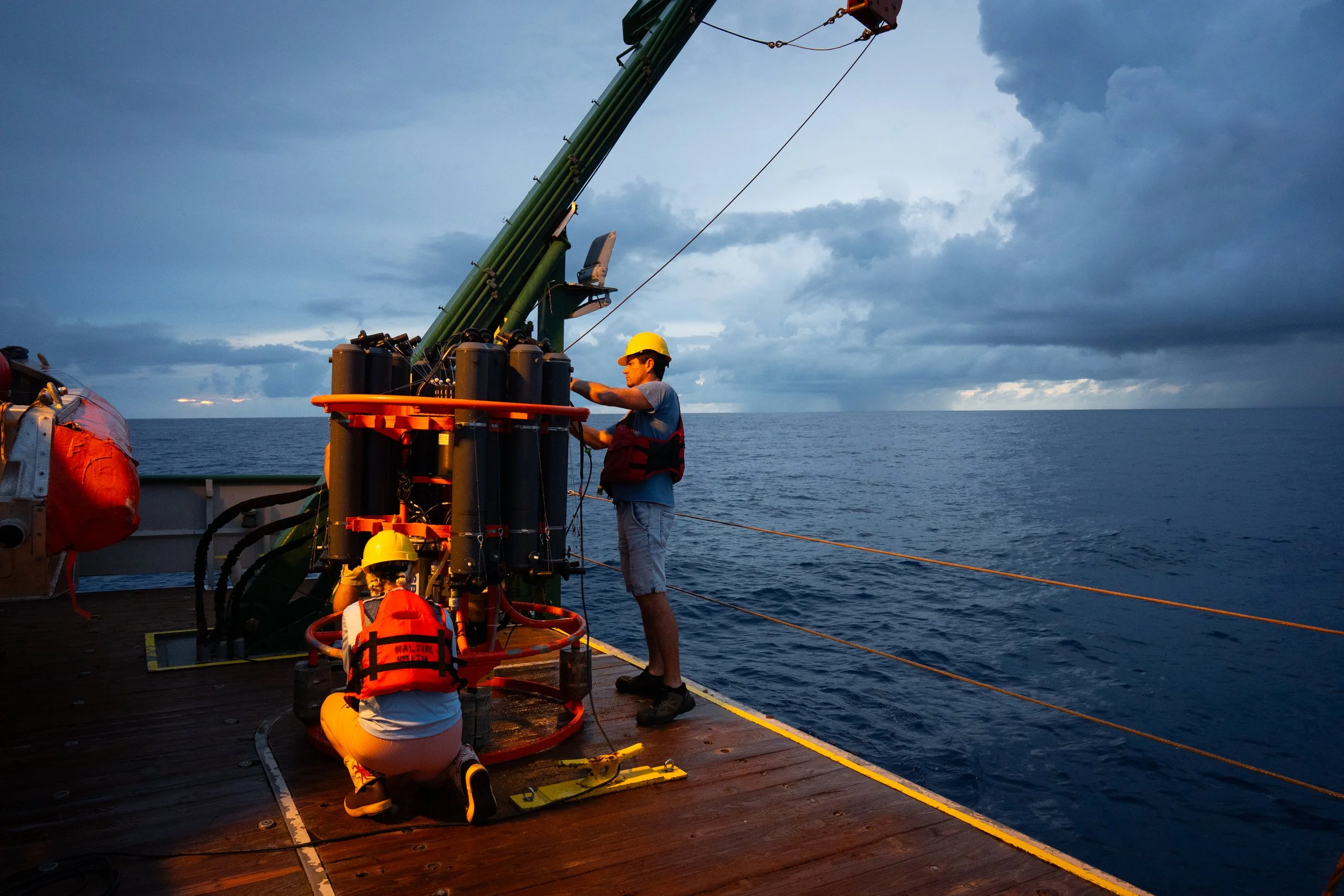
Tyler Christian and Denis Volkov, an oceanographer, collect ocean water from a recovered instrument during sampling operations.
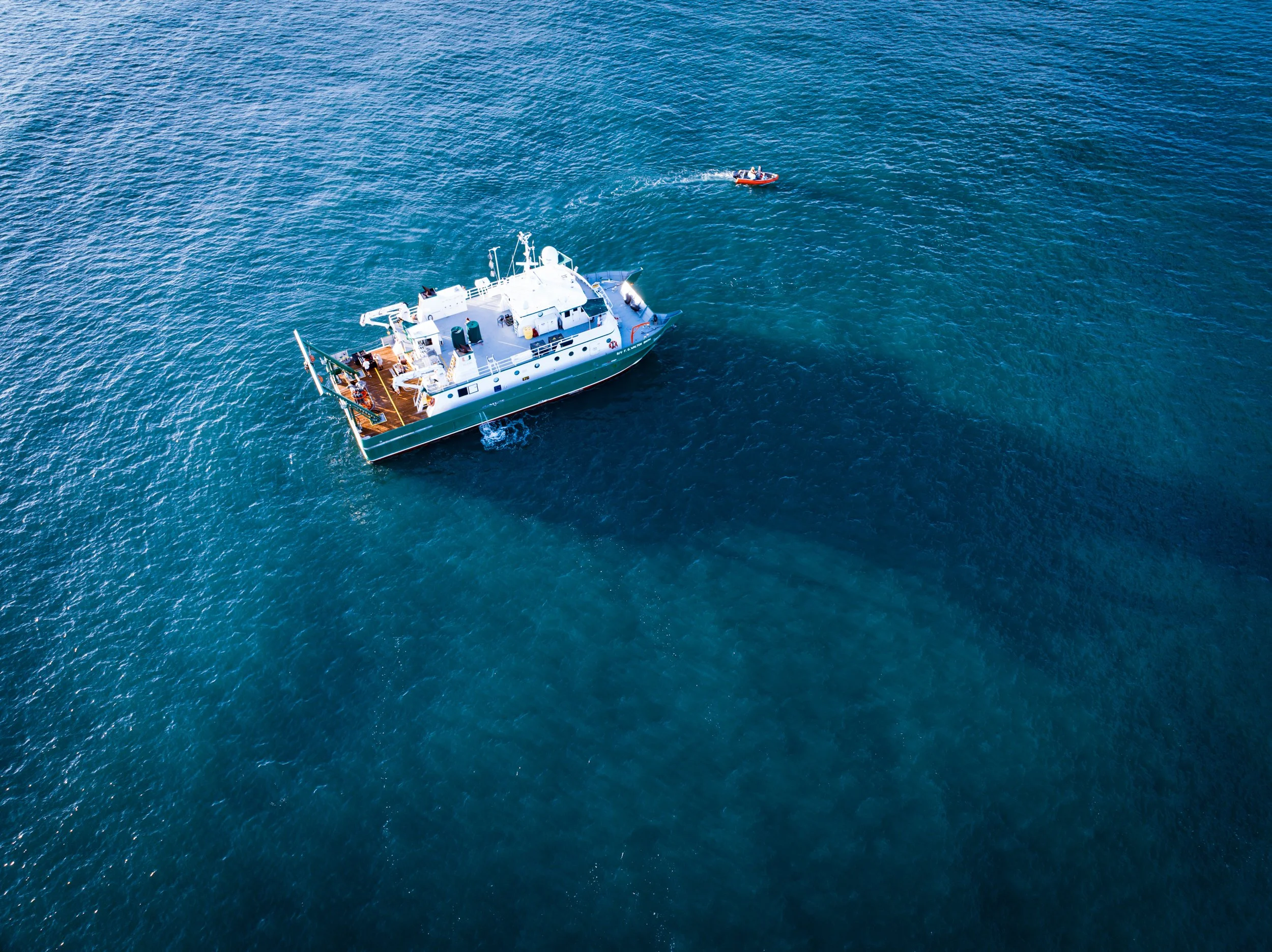
A dive boat carries scientists to a research site as data collection continues offshore on the morning of September 4, 2025.
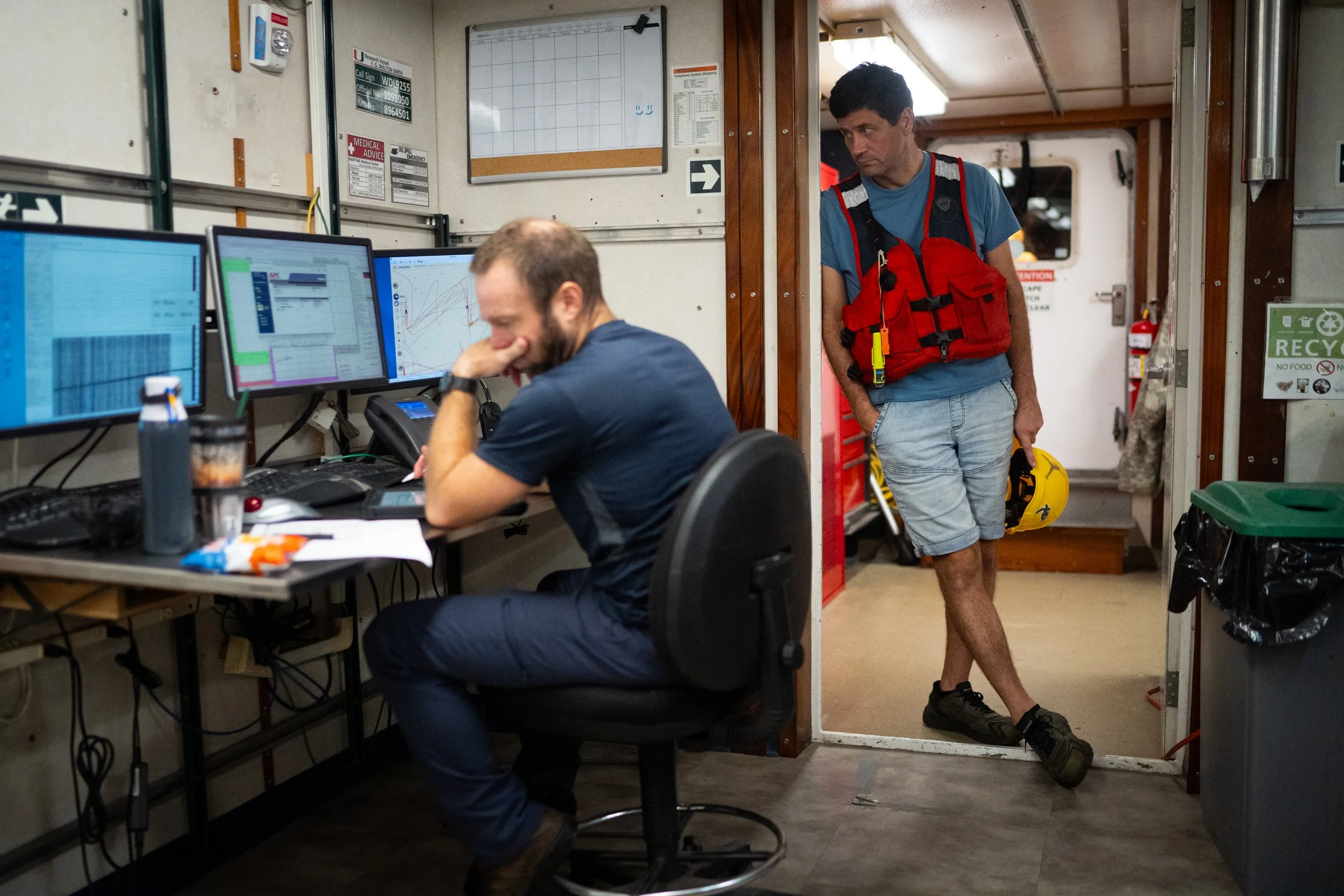
Around 4 a.m., Denis Volkov, right, leans against a wall as Jay Hooper, 42, works during overnight data collection.
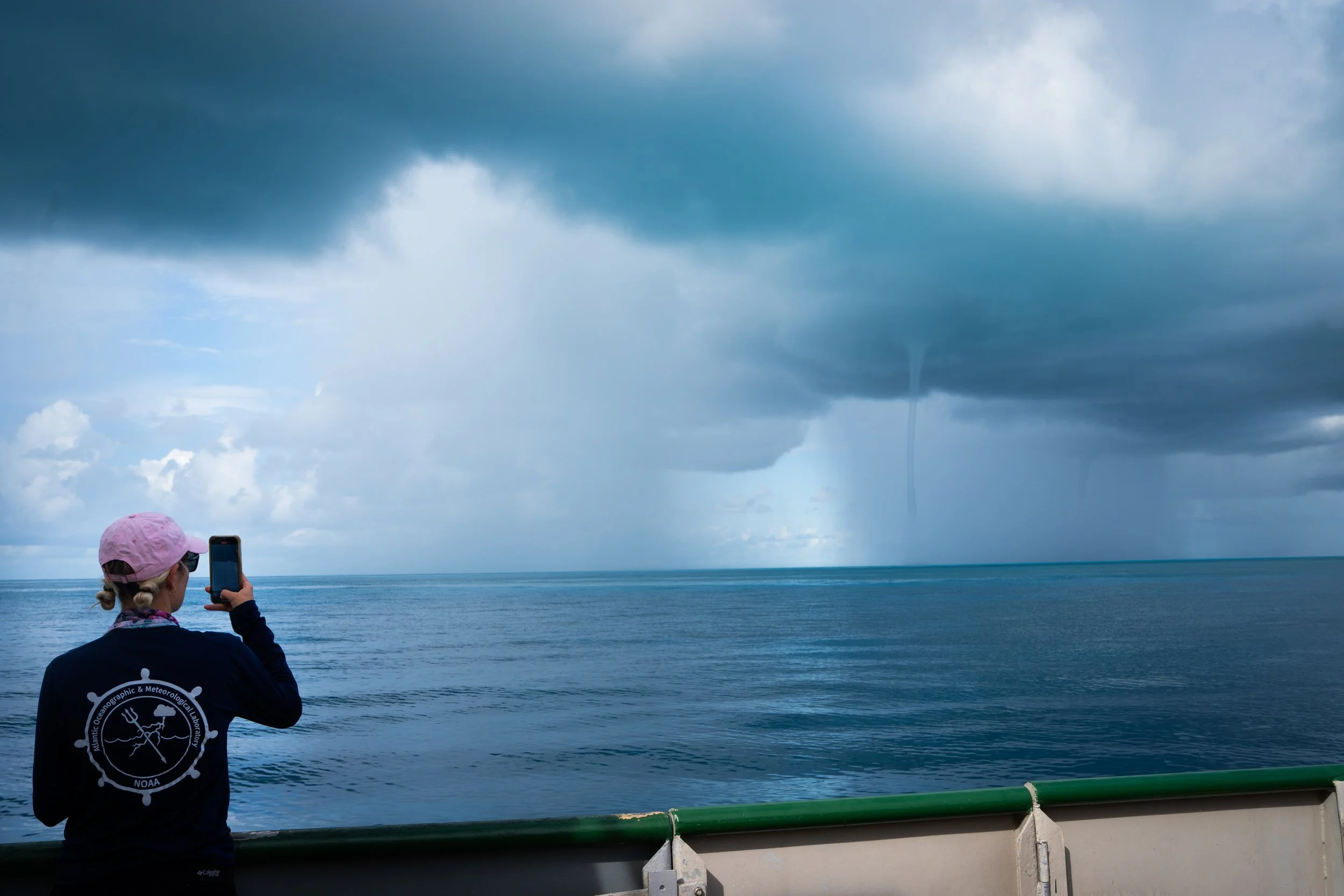
Tyler Christian photographs a waterspout during the research mission.
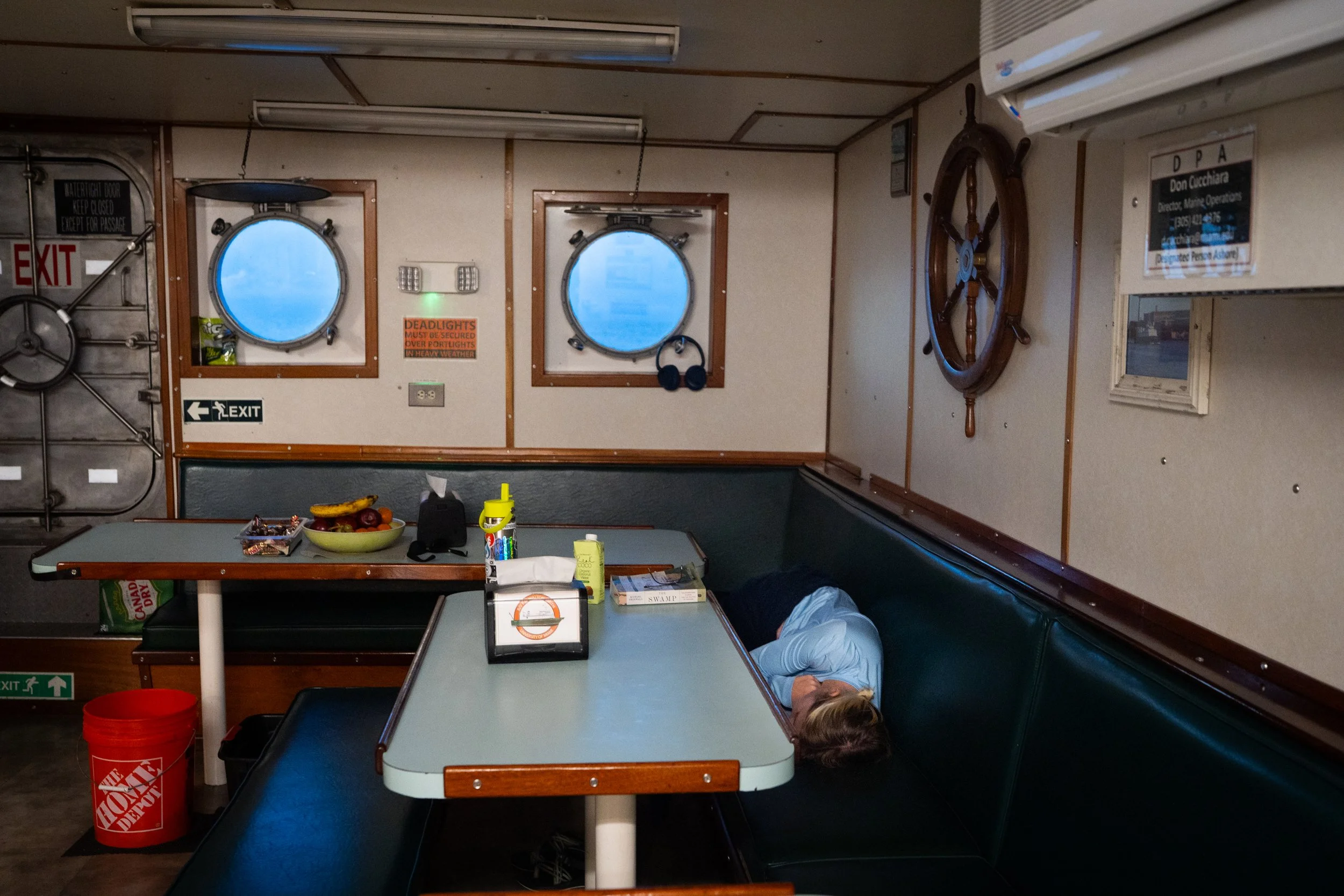
Tyler Christian takes a brief nap in the galley as the vessel travels back to Miami following days of fieldwork.
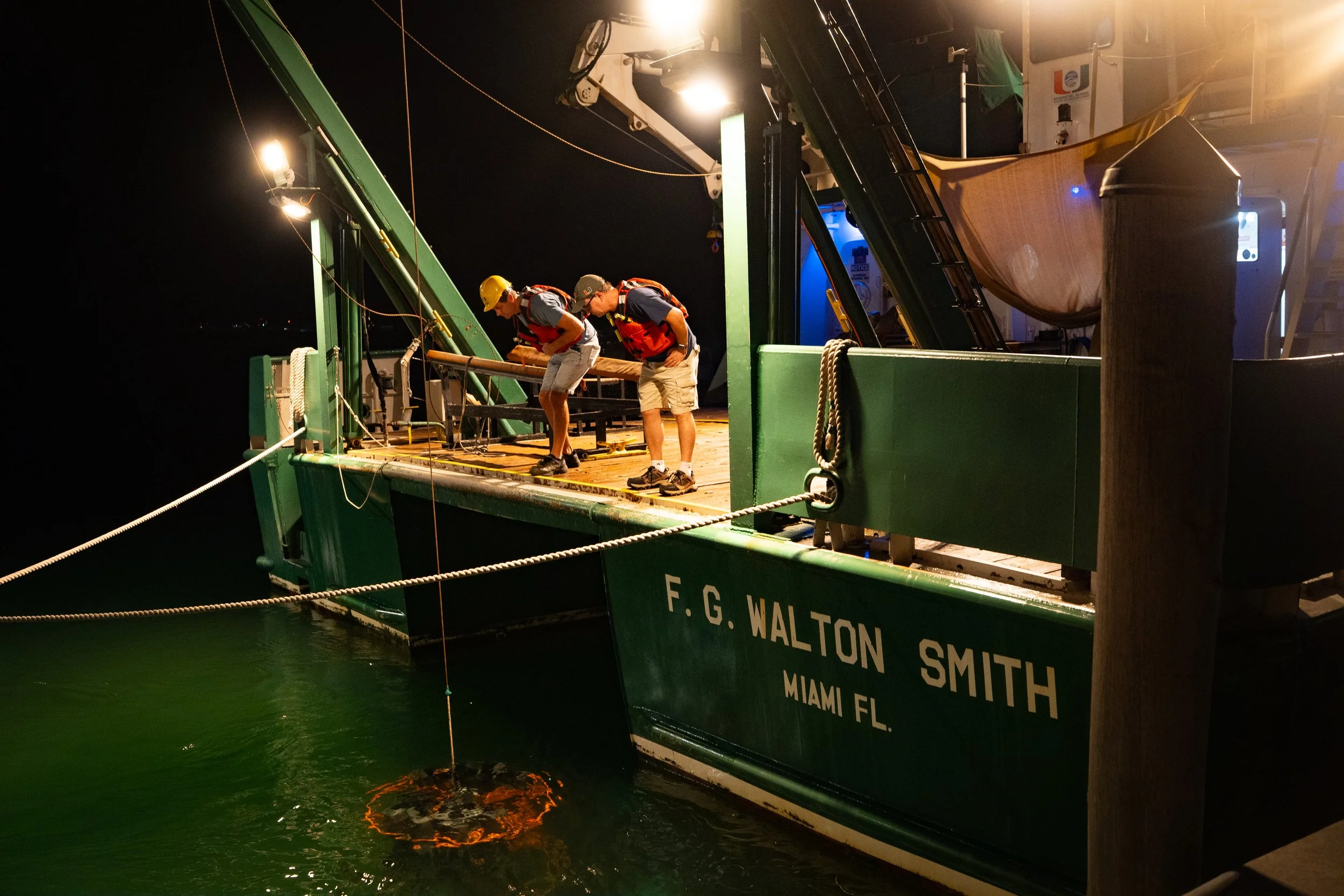
Oceanographers Denis Volkov, left, and Ryan H. Smith watch as an instrument used to sample the ocean is lowered into the water before the vessel departs for Bahamian waters.
Please see online article here:
https://www.washingtonpost.com/climate-environment/2026/02/15/climate-change-ocean-current/
Article is behind a paywall. If you need access, please use the following account.
username: washingtonpostaccess@gmail.com password: Access1234!