Project Two for The Banner,
Uvalde Texas, School Shooting
On May 24, 2022, a gunman killed 19 children and two teachers at Robb Elementary School in Uvalde, Texas. Nearly 400 law-enforcement officers responded, but it took more than an hour to stop the attacker. Subsequent investigations identified serious failures in leadership, communication, and training.
In the weeks that followed, Uvalde was effectively paralyzed by grief, anger, and uncertainty. Schools closed, public life slowed, and families waited for answers as official accounts shifted and trust in authorities eroded. The community’s search for accountability and healing continues.
BACKSTORY: While covering the school shooting in Uvalde, Texas for the Washington Post, I relied on my skills both as a visual storyteller, and just as importantly, as an editorial partner - dual roles that demanded sound judgement, collaboration, and logistical problem-solving under extreme pressure under rapidly-evolving, deeply traumatic circumstances.
From the outset, I worked in close coordination with reporters on the ground and with photo editors in Washington, D.C. My role extended beyond producing photographs. I actively contributed reporting insight, pitched story directions, and helped shape narratives as events unfolded. In an environment where access was limited, information was fragmented, and emotions were raw, this kind of collaboration was essential to producing coverage that was both accurate and humane. I was the first editor on all the stories I produced on Uvalde.
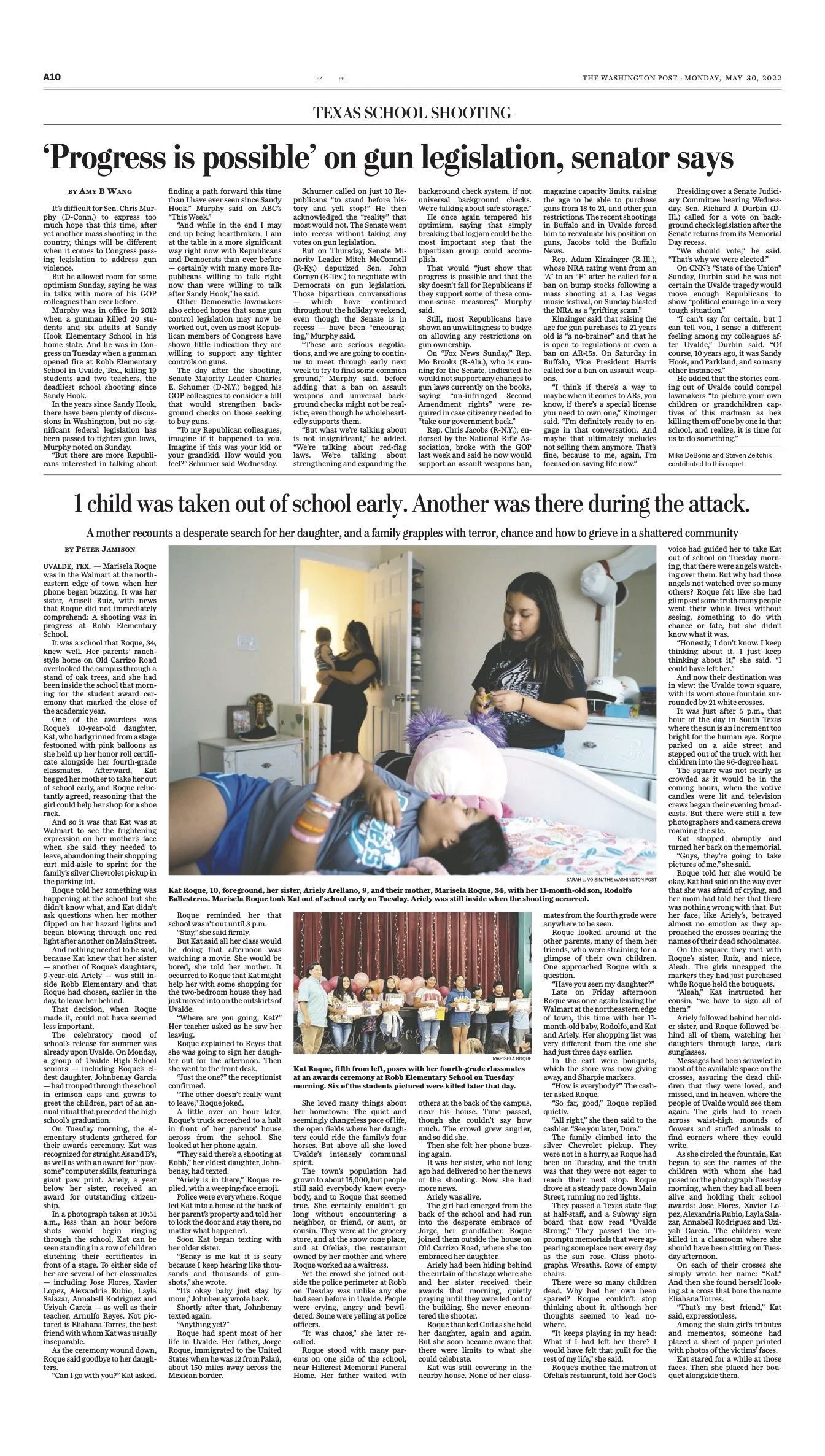
Two stories from my Uvalde coverage illustrate this editorial approach clearly. One focused on Kat Roque, a student who survived the shooting after losing her best friend and much of her class. Our initial reporting plan centered on documenting a student with visible physical injuries to illustrate the immediate brutality of the violence. Drawing from my experience in visual storytelling, I pitched an alternative focus: centering on a survivor whose trauma was primarily psychological—profound grief and invisible wounds that would continue to shape their life and family long after the event. I believed this angle would more fully capture the enduring, often unseen impact on the community, where many families grappled with lasting emotional devastation. After discussion, the team agreed this focus better reflected the broader realities and allowed us to tell a more resonant, comprehensive story of the violence’s human toll.
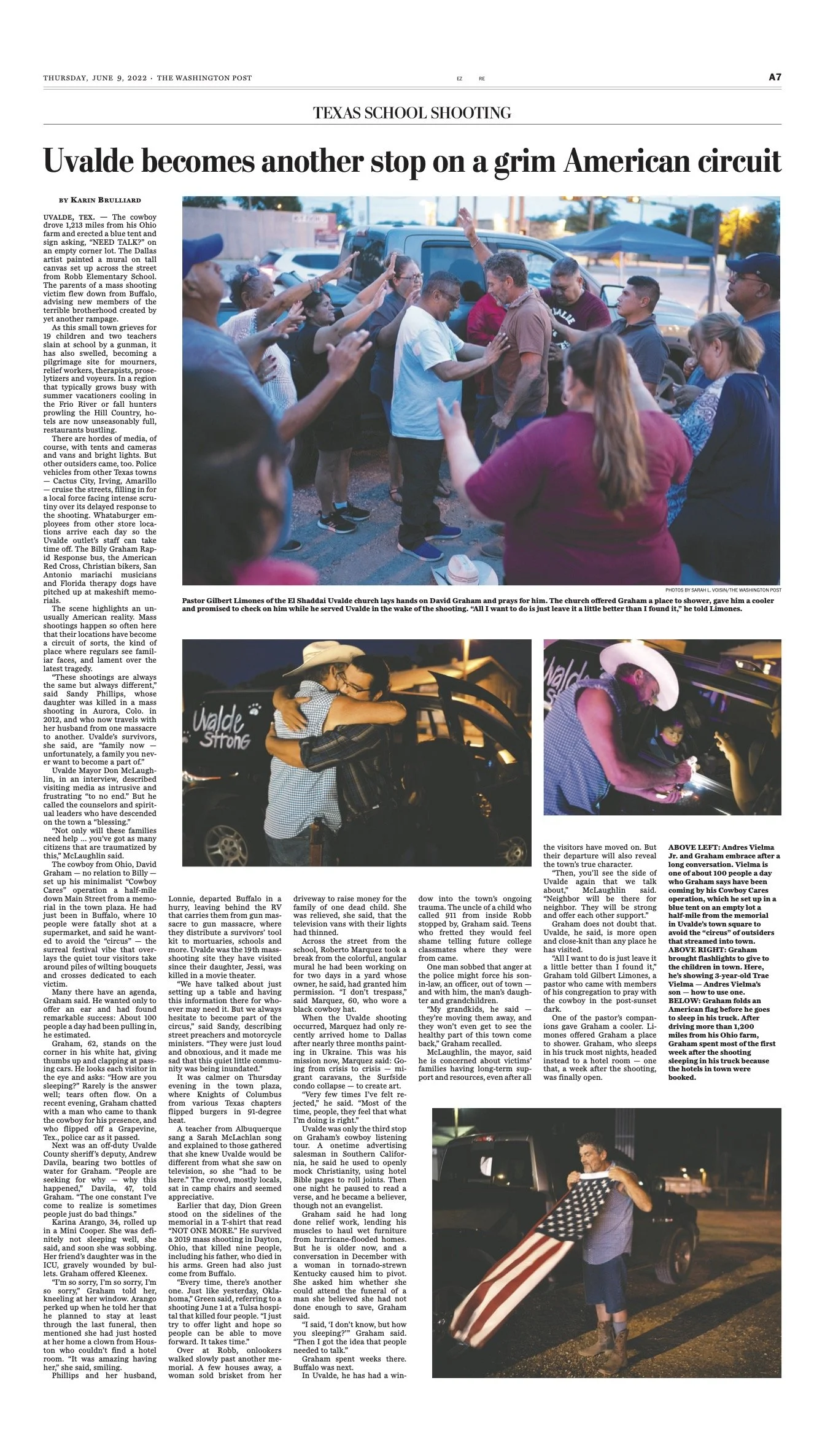
Another story followed David Graham, a cowboy from Ohio who drove 1,213 miles to Uvalde to offer moral support by setting up “Cowboy Cares” on a street corner in town. I had already spent significant time photographing Graham and recognized the quiet power of his presence. I introduced him to a reporter and helped bring his story into the broader coverage, offering readers a portrait of how people far removed from the tragedy felt compelled to respond.
Because Uvalde is close to the U.S.–Mexico border, language access was a significant factor in the reporting. I served as a Spanish translator for reporters who did not speak the language, enabling more direct communication with Spanish‑speaking families and allowing their experiences to be represented accurately and respectfully. This role deepened the reporting and helped ensure that key voices were not lost because of language barriers.
In addition to editorial and reporting contributions, I played a critical logistical role. At a time when hotels were fully booked and cellphone service was unreliable, I located and secured two houses that became makeshift headquarters for The Washington Post staff in Uvalde. This support proved essential to the team’s ability to coordinate, file stories, and continue reporting effectively from the ground.
Uvalde was among the most difficult assignments of my career because of the scale of loss and the intimacy of the grief. Reporting took place amid mourning families, limited infrastructure, and intense public scrutiny. Despite these challenges, I was able to meet deadlines, produce meaningful work, and help strengthen the overall coverage through collaboration, editorial judgment, and empathy. This project reflects how I work in moments of crisis: contributing not only images, but also perspective, structure, and support that help ensure coverage is both rigorous and responsible.
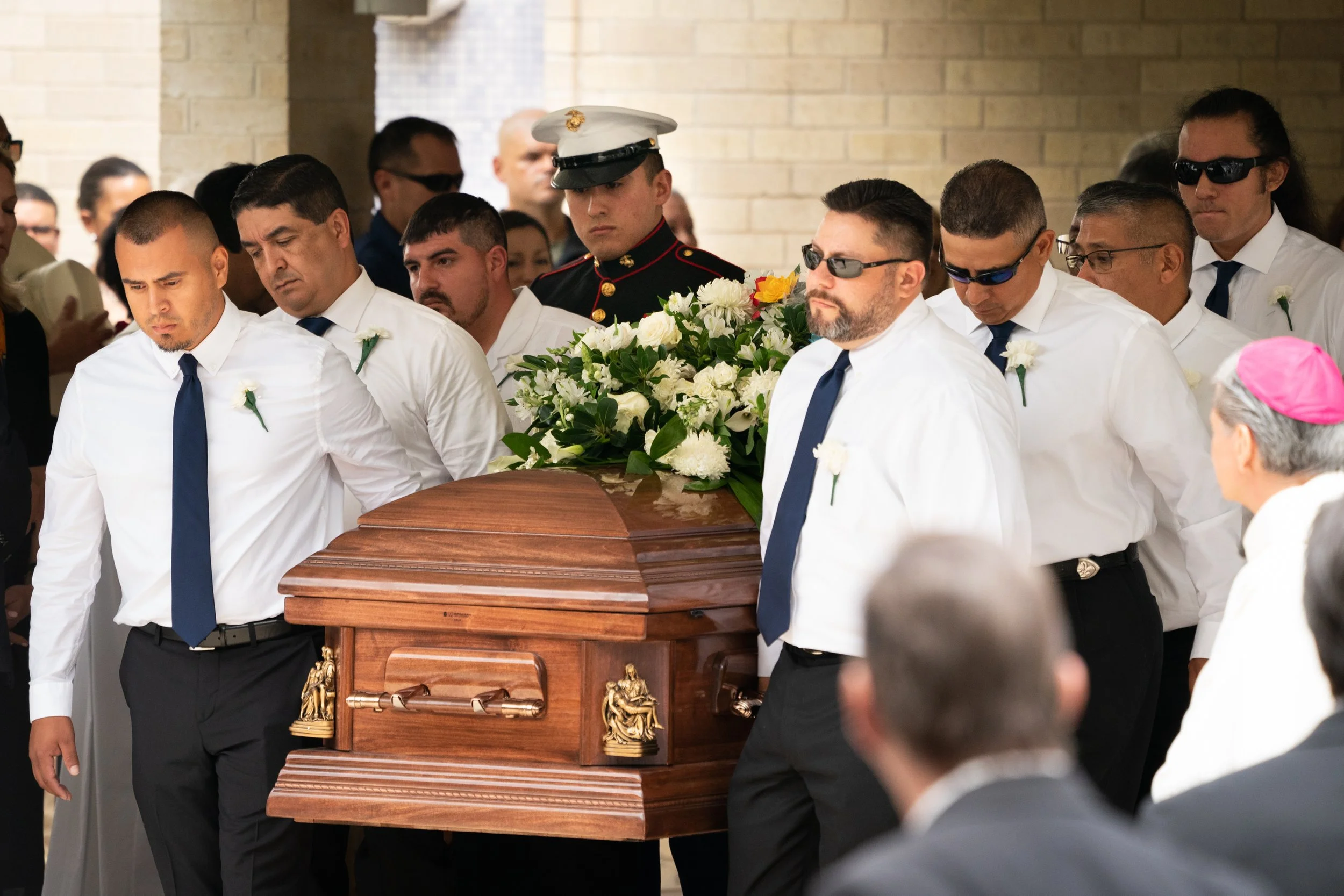
Pallbearers, including the couple’s son Cristian Garcia, 23, a U.S. Marine, carry the caskets of Irma Linda Garcia and her husband, Jose Antonio Garcia, out of Sacred Heart Catholic Church after their funeral Mass in Uvalde, Texas, on June 1, 2022.
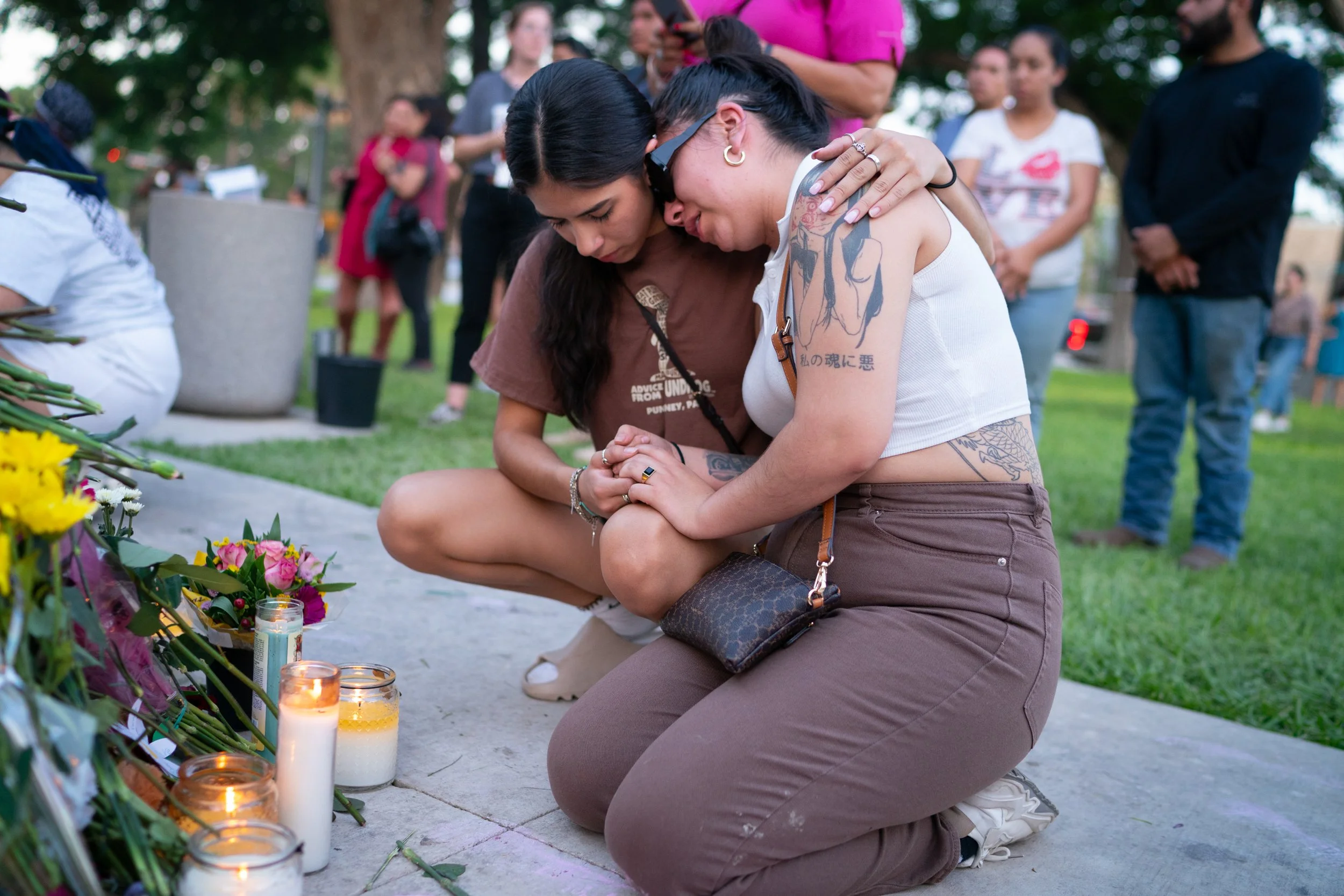
Ayanna Solis, 17, of San Antonio, left, and Kiana Cota, 22, who is in the military and took leave to travel to Uvalde, pray at the crosses memorializing the victims in the town square in Uvalde, Texas, on May 27, 2022. Both women have family in Uvalde.
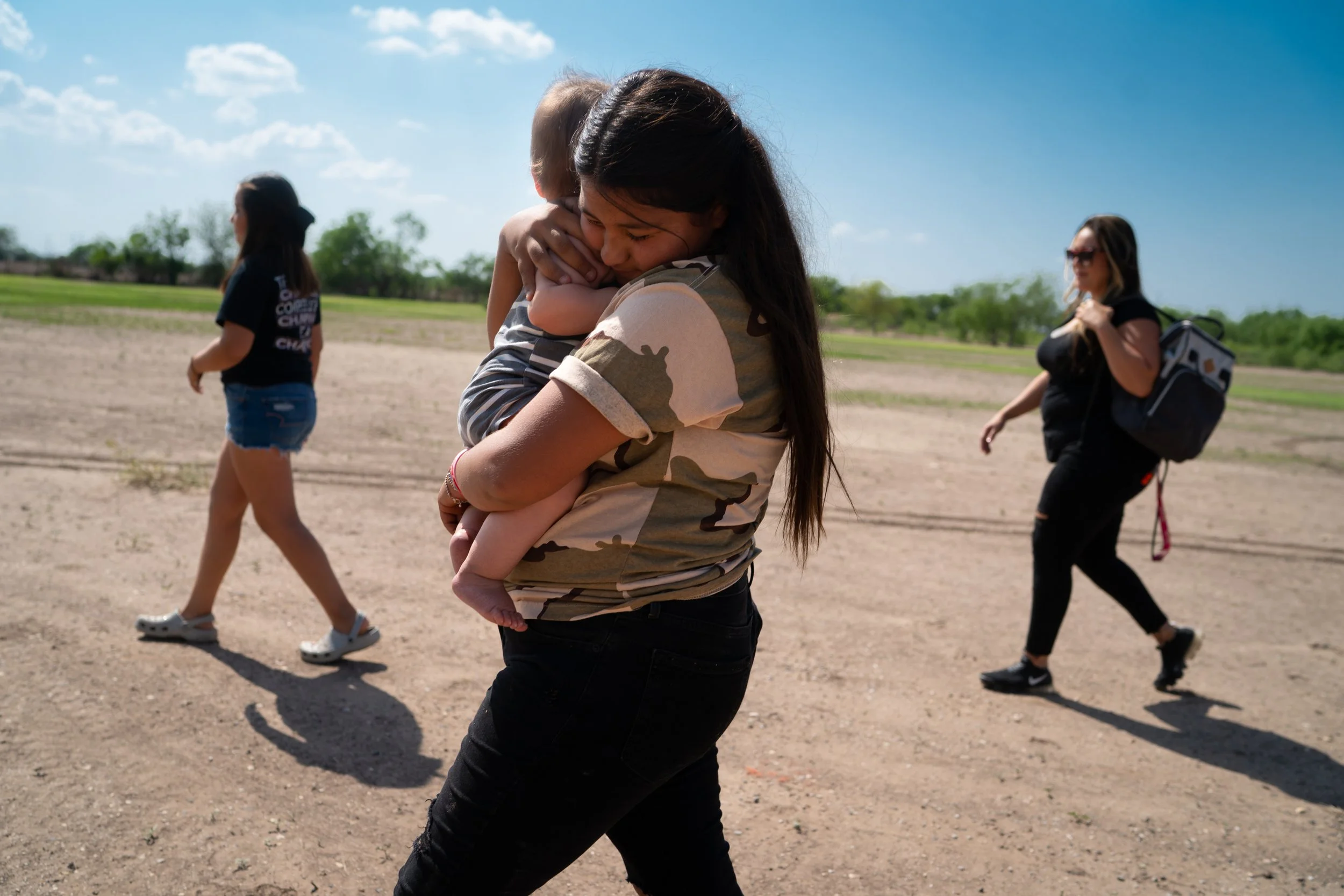
Marisela Roque, 34, walks across her yard with three of her children — Ariely Arellano, 9, 11-month-old Rodolfo Ballesteros, and Kat Roque, 10. Two of her children attend Robb Elementary School, where many of Kat’s fourth-grade classmates were killed in the May 24 shooting.
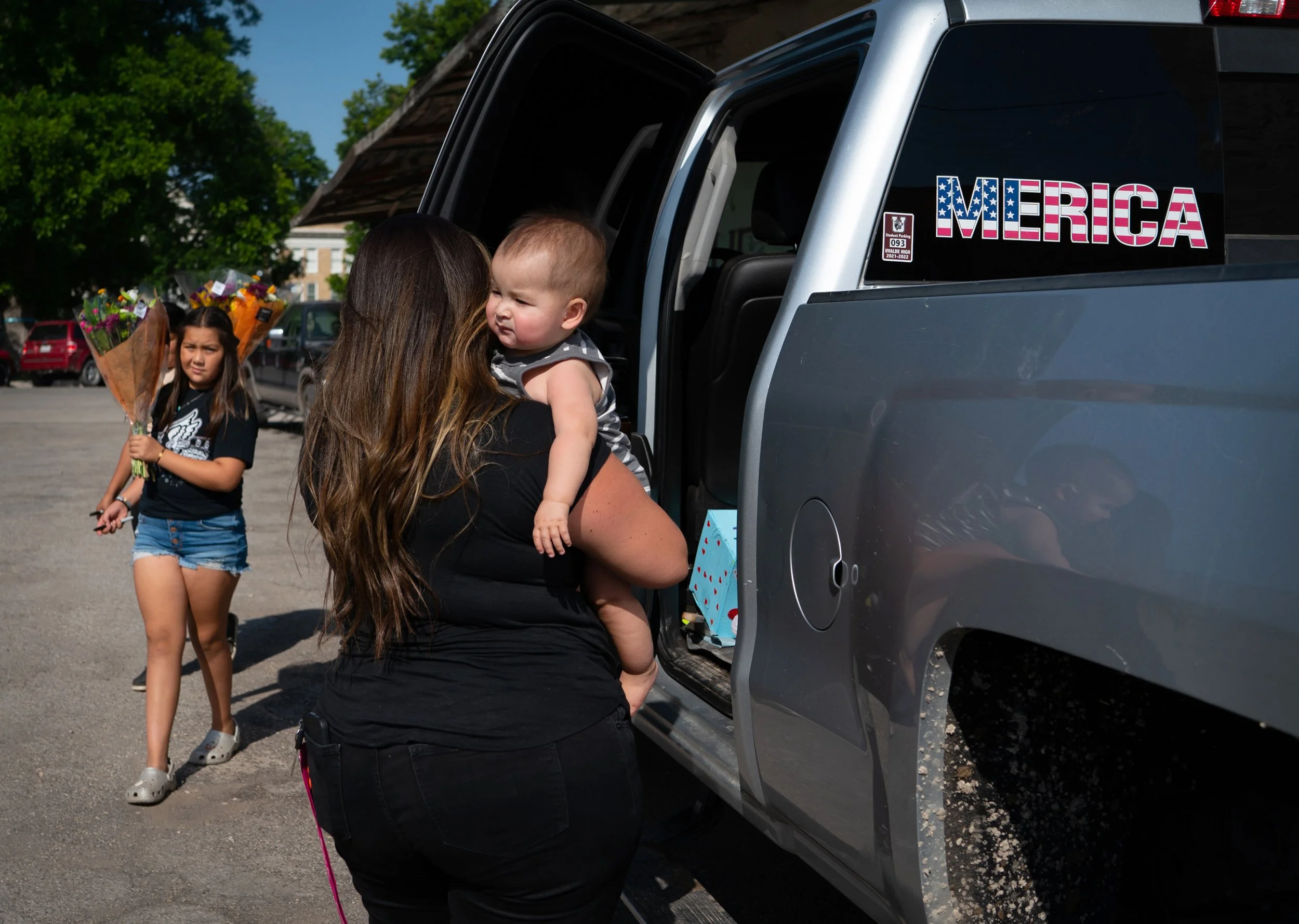
Marisela Roque, 34, lifts her youngest child, 11-month-old Rodolfo Ballesteros, from a car as her daughter Ariely Arellano, 9, walks toward a memorial in Uvalde, Texas, where families left flowers and signed crosses for the victims. That morning, Roque attended a school awards ceremony with both girls and later decided to take Kat out of school, while Ariely remained on campus and hid during the attack.
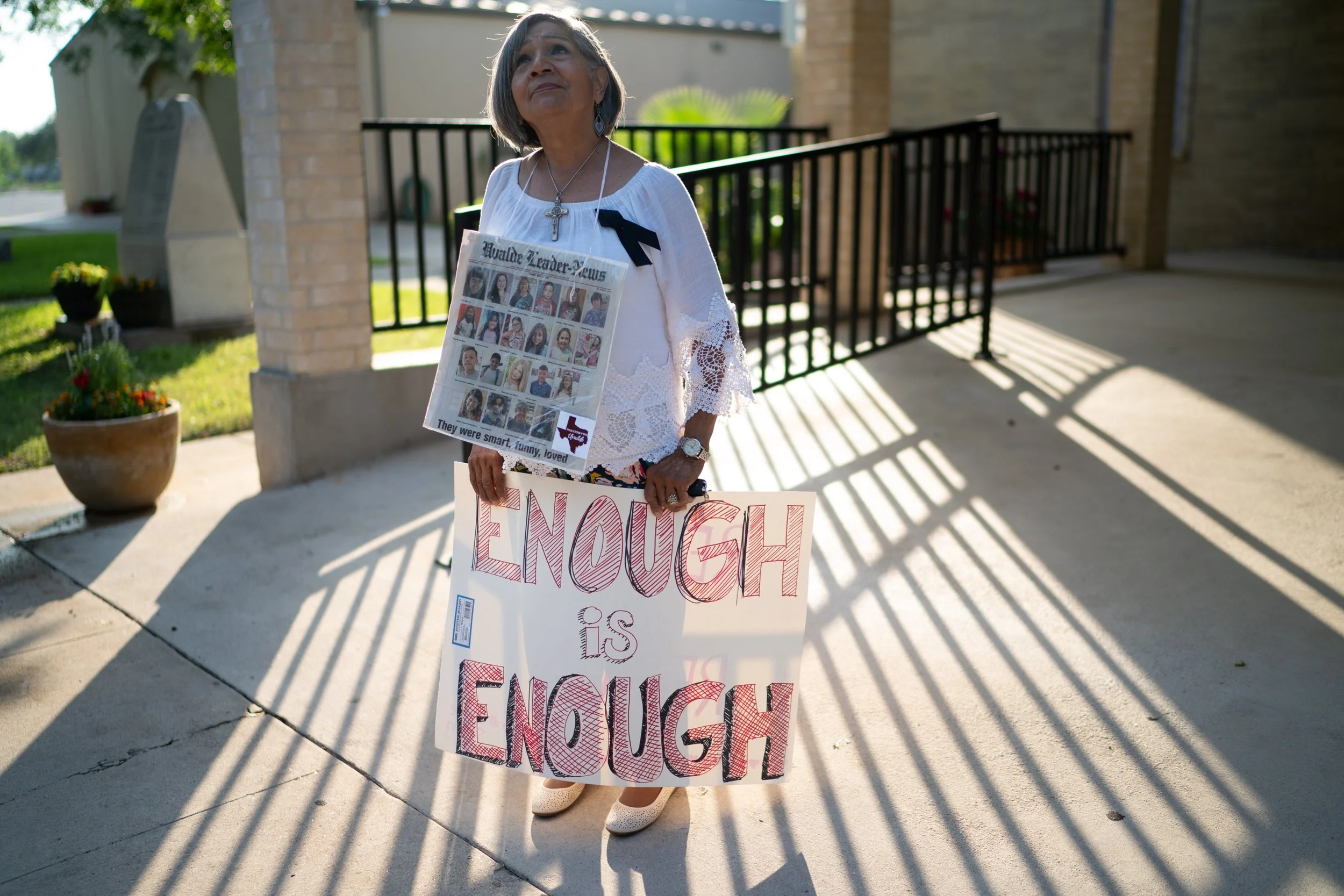
Yrma Fuentes, 75, holds a reversible sign reading “Enough is Enough” and “Repent and Resign” outside Sacred Heart Catholic Church in Uvalde, Texas. Fuentes said she was dissatisfied with the response from police and public officials during and after the school shooting.
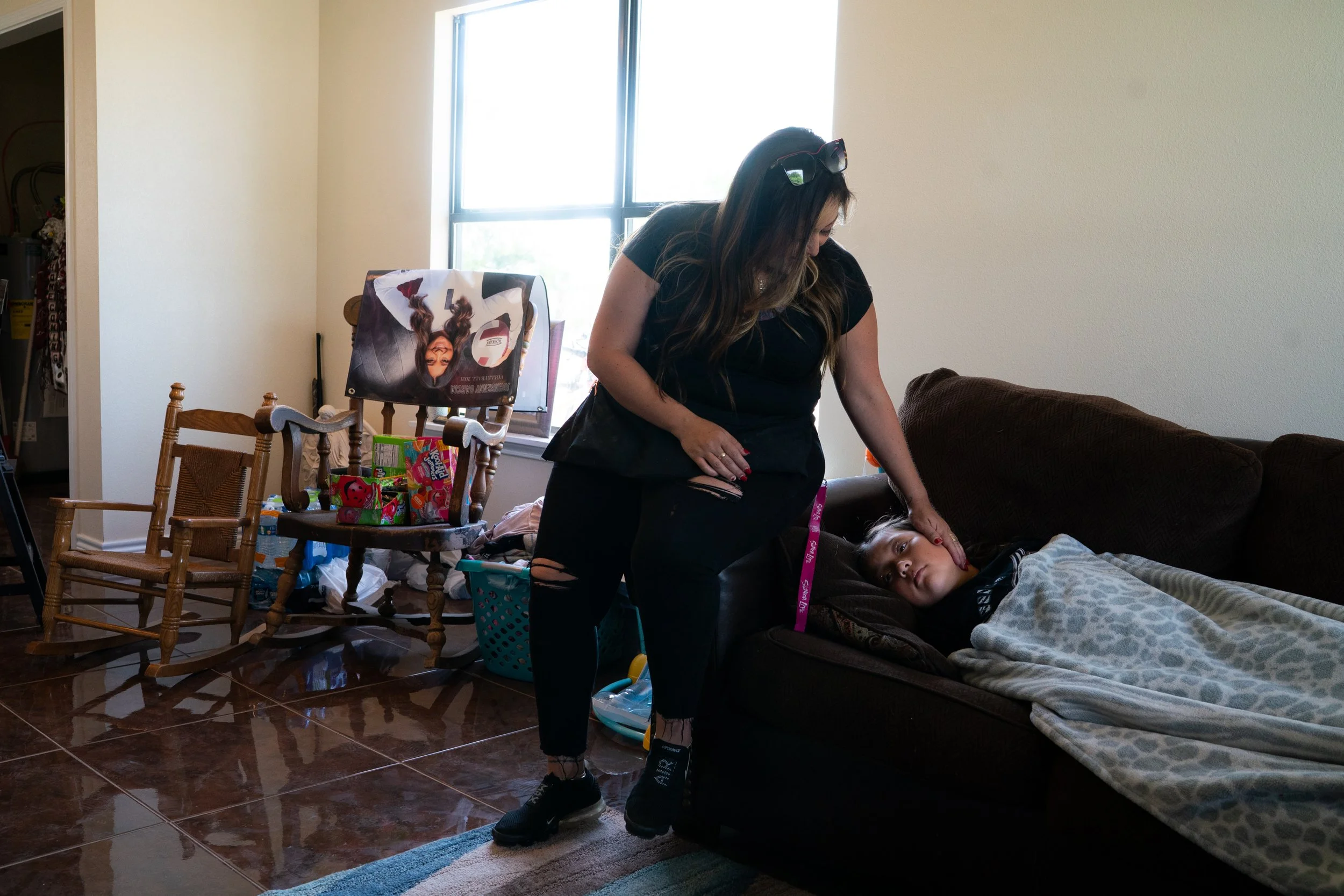
Marisela Roque, 34, touches the face of her daughter Ariely Arellano, 9, who was inside Robb Elementary School during the May 24 shooting in Uvalde, Texas. Two of Roque’s children attend the school.
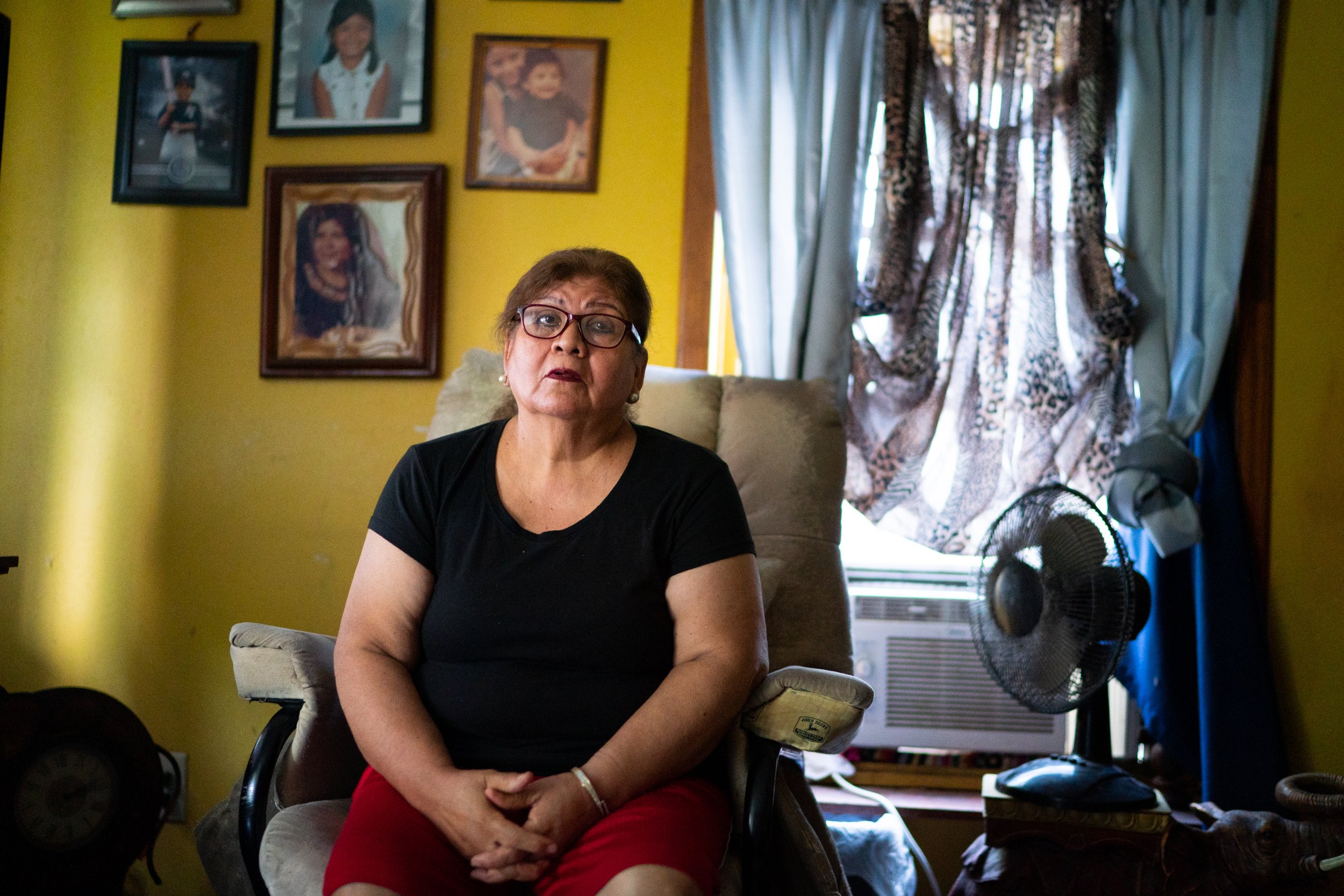
Rosa Chavez, 65, who lives a block from Robb Elementary School, sits outside her home in Uvalde, Texas. Chavez said she heard the gunfire and watched as people cried and ran down the street. She cares for her granddaughter Aracely Chavez, 4, nearly every day and was with her at the time of the shooting; the family has chosen not to tell the children what happened.
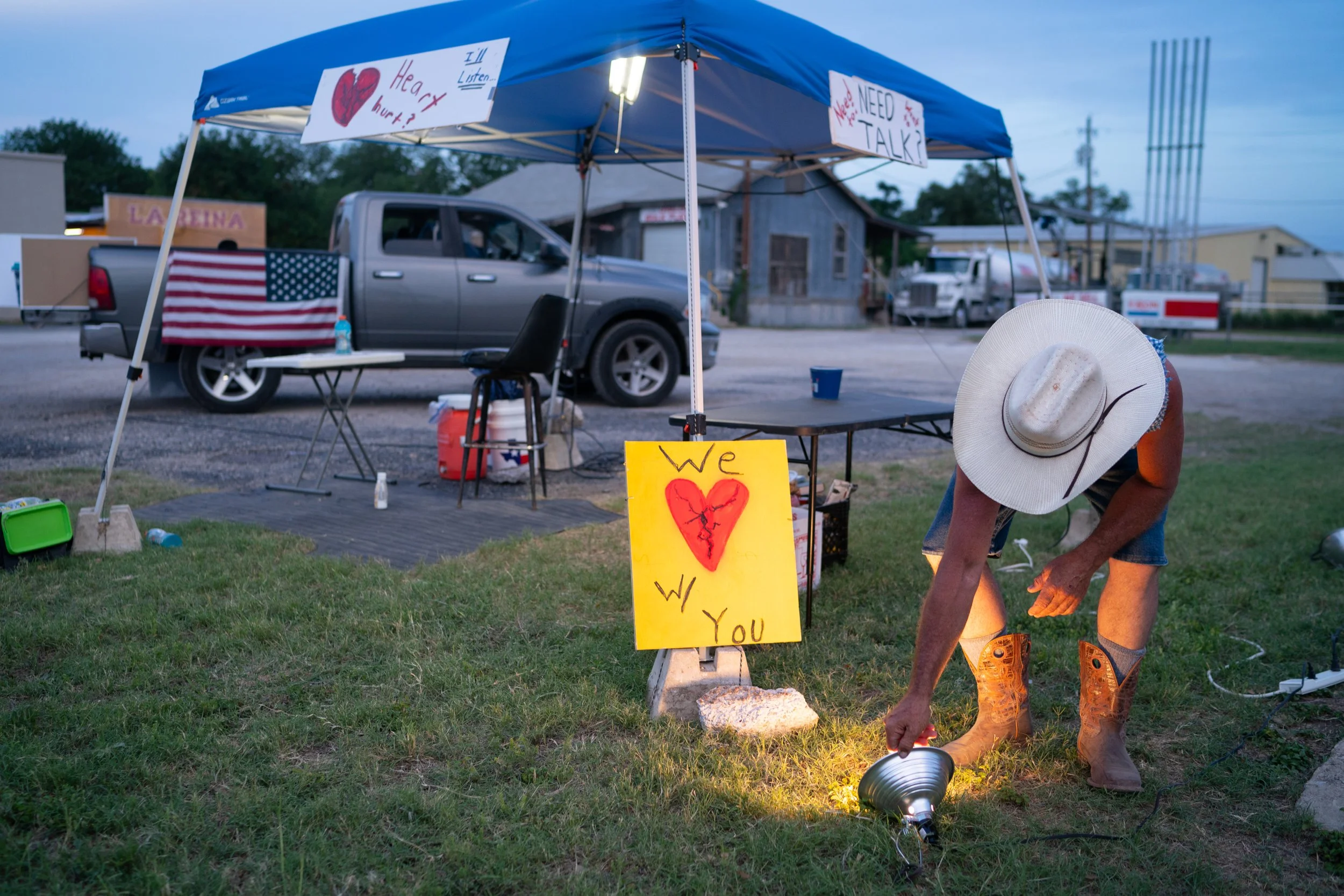
David Graham, 62, of Bellville, Ohio, adjusts lights at “Cowboy Corner” as evening falls in Uvalde, Texas. Graham, who has worked in disaster zones for decades, traveled to Uvalde to offer a listening ear to residents grieving the Robb Elementary School shooting. With no political or religious agenda, he spends long days standing on a street corner, inviting people to share their stories.
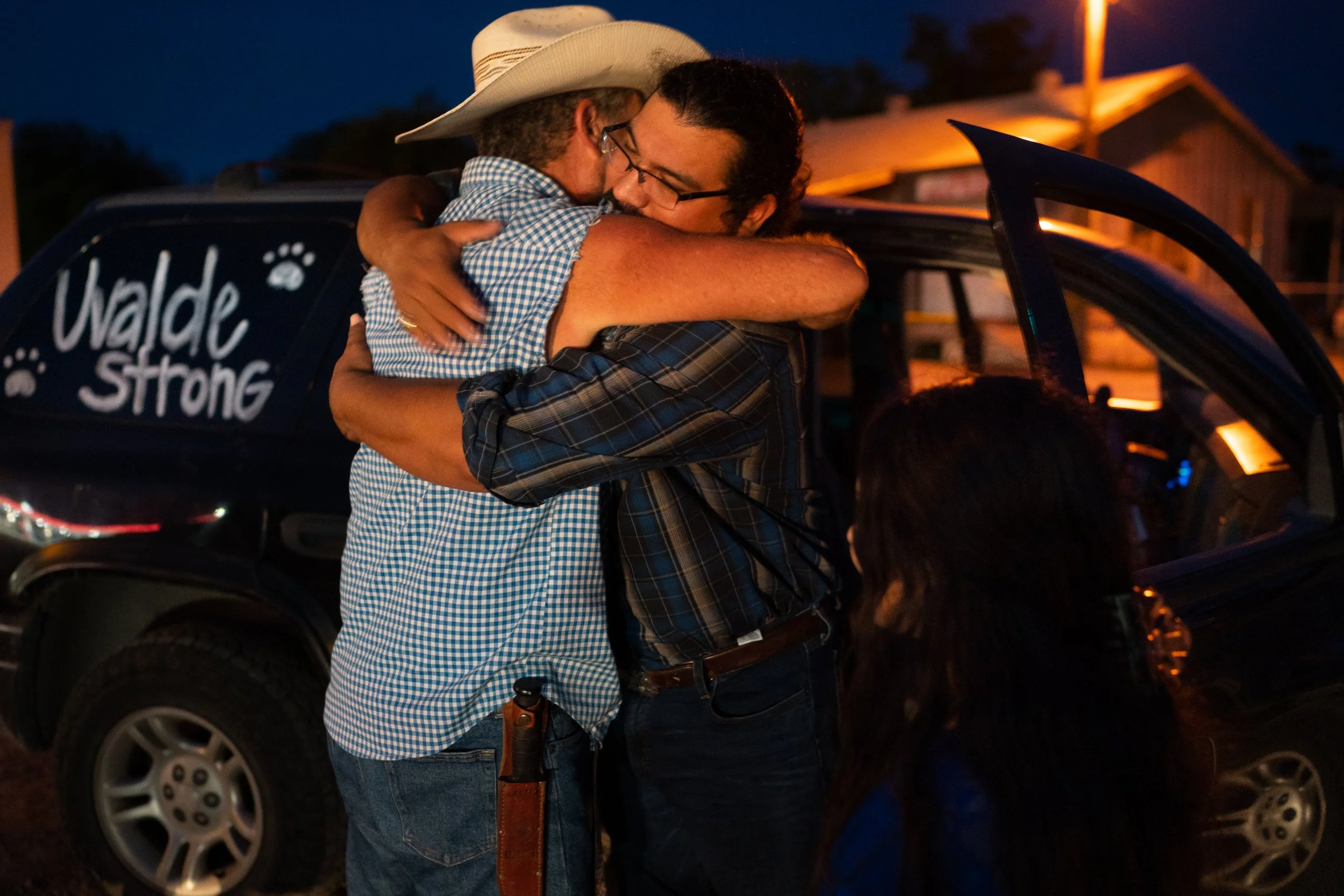
David Graham, 62, of Bellville, Ohio, embraces Andres Vielma Jr., 30, after a long conversation at “Cowboy Corner." An outsider with no ties to the community, Graham said some residents find it easier to talk to someone who is not from Uvalde.
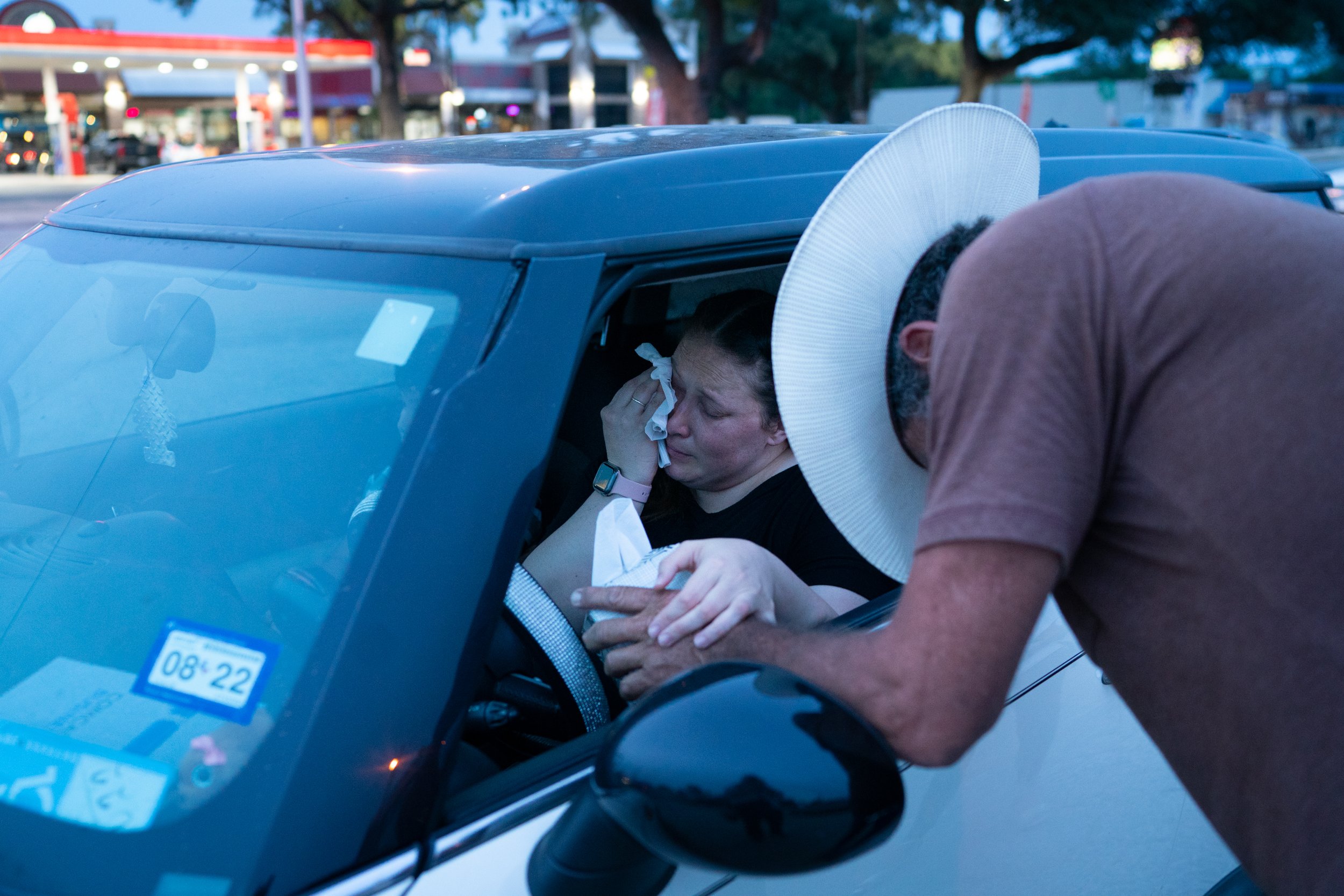
Karina Arango, 34, cries as she speaks with David Graham, 62, of Bellville, Ohio, at “Cowboy Corner." An outsider with no ties to the community, Graham said some residents find it easier to talk to someone who is not from Uvalde. He left behind his family and farm to remain through the funerals, often sleeping in his truck and relying on donations of food and water from passing drivers.
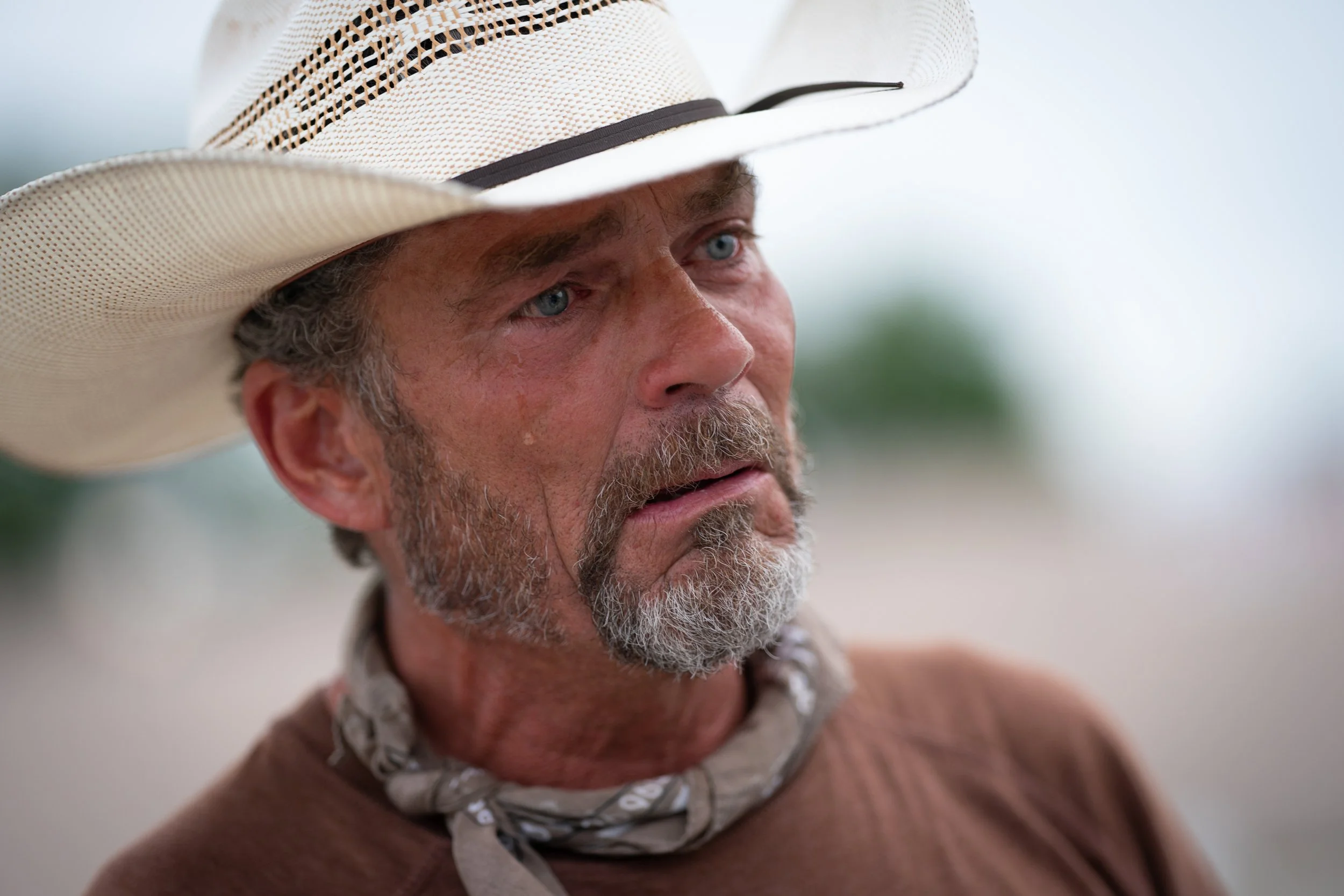
David Graham, 62, of Bellville, Ohio, wipes away a tear while listening to a resident at “Cowboy Corner” in Uvalde, Texas, where he spent days offering support to people grieving the Robb Elementary School shooting.
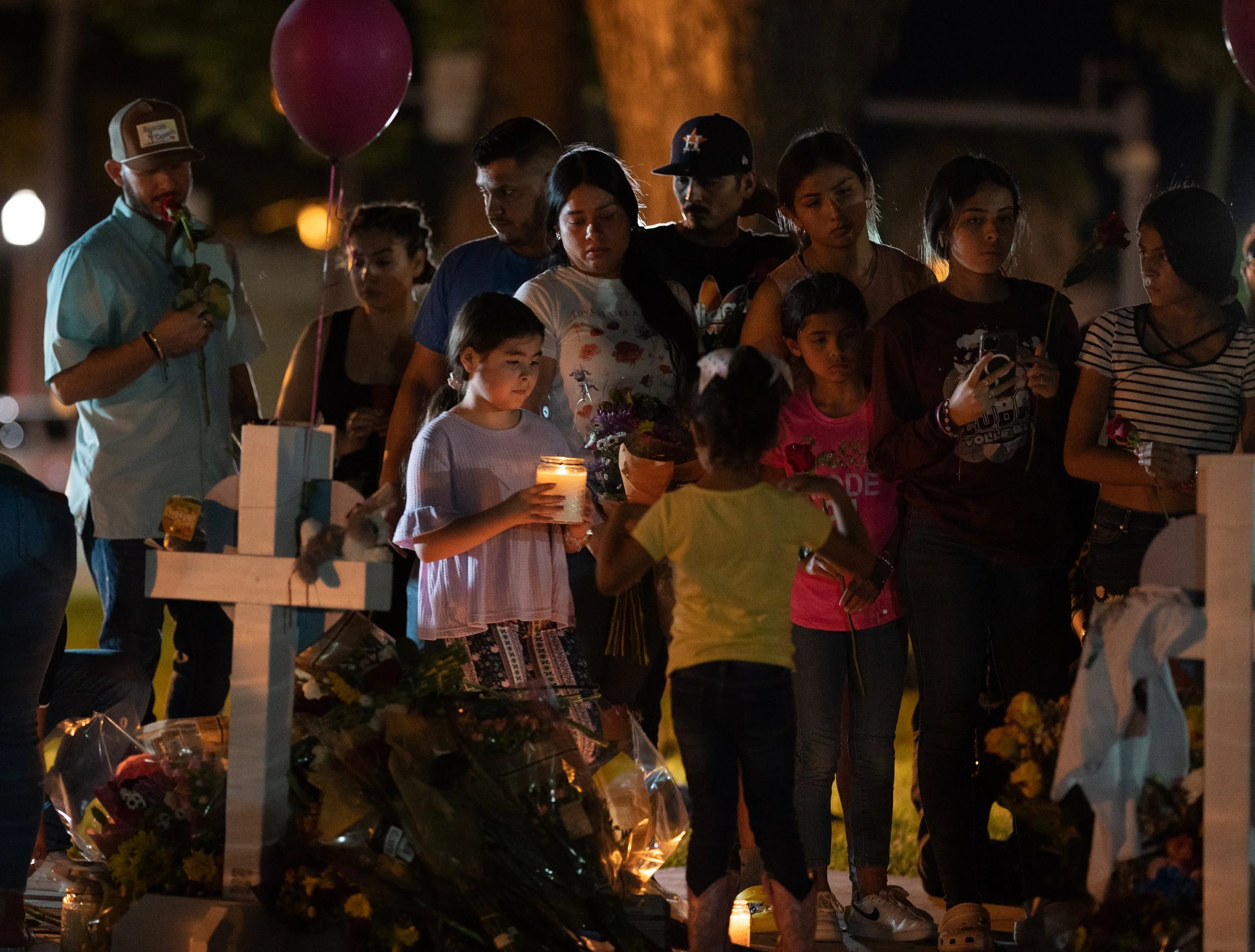
Eliana Valdez, 7, of San Antonio, carries a candle to a memorial in the Uvalde town square, where crosses were set up to honor the victims of the Robb Elementary School shooting, on May 26, 2022.
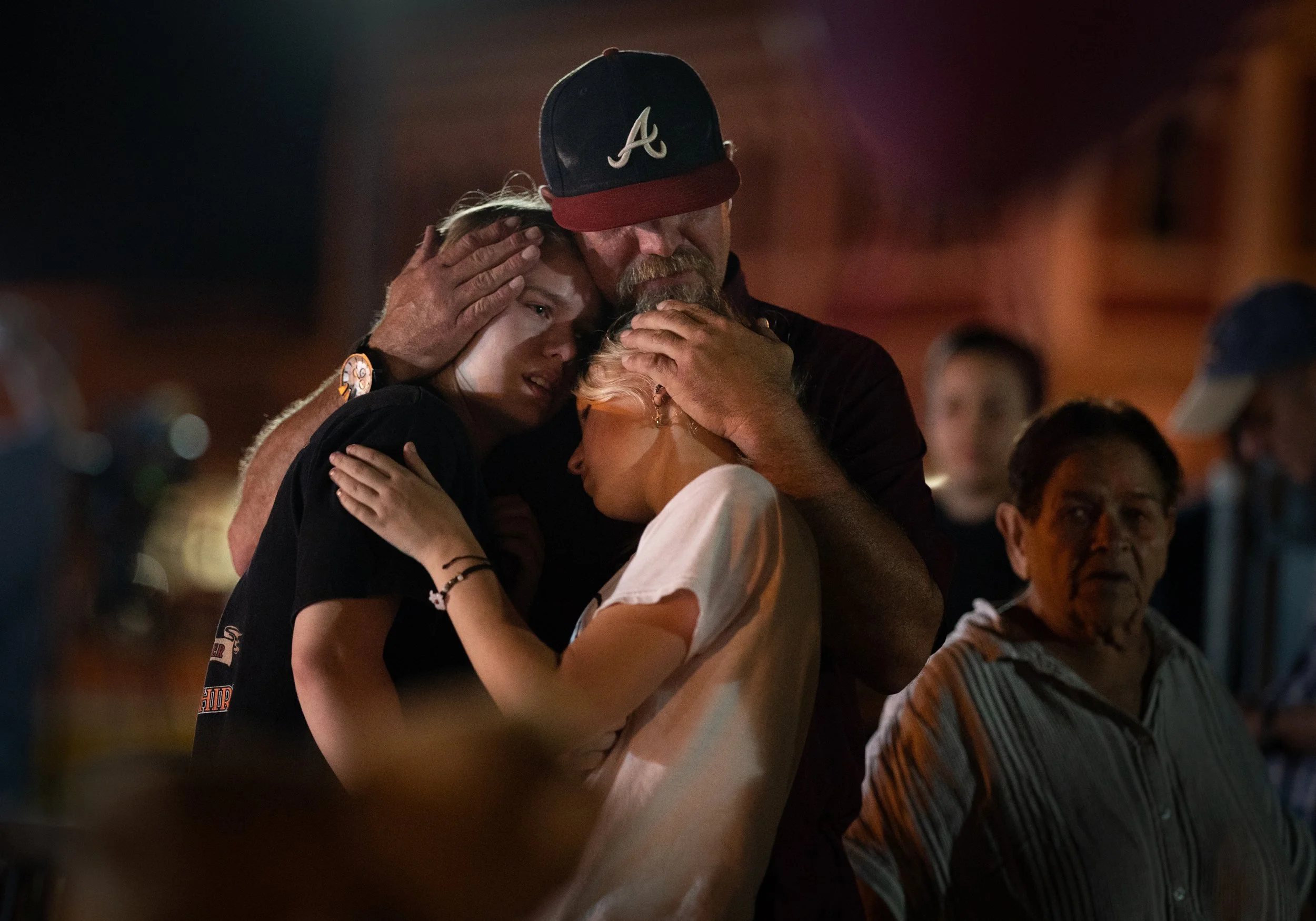
A group embraces and cries at a memorial in the Uvalde town square, where crosses were set up to honor the victims of the Robb Elementary School shooting, on May 26, 2022.
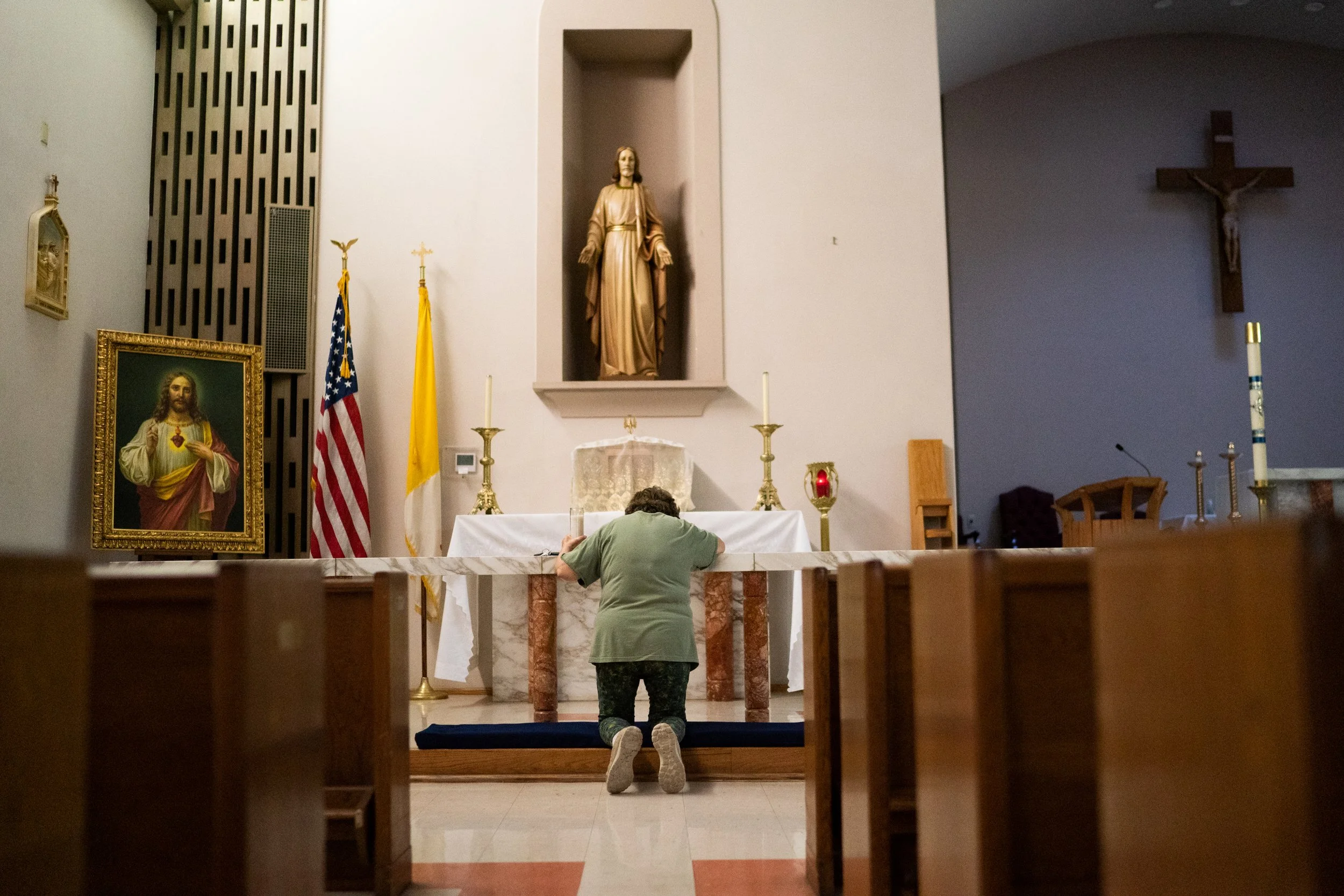
Estela Murillo, 72, prays at an altar inside Sacred Heart Catholic Church in Uvalde, Texas. Father Eduardo Morales, known to parishioners as Father Eddy, led services for many of the victims of the Robb Elementary School shooting.
Please see online articles below:
https://www.washingtonpost.com/nation/2022/05/28/uvalde-school-shooting-mother/
https://www.washingtonpost.com/nation/2022/06/05/uvalde-mass-shooting/
https://www.washingtonpost.com/technology/2022/05/28/uvalde-texas-gunman-online-threats/
Articles are behind a paywall. If you need access, please use the following account.
username: washingtonpostaccess@gmail.com password: Access1234!